Life Happens…

I finished up my last blog, and headed “down” the shore (a NJ expression) for an overnight, meeting up with an old college friend and her husband, who had just flown in from the West Coast. It was a lovely day that Sunday, and then hurricane Erin stirred things up, and Monday was a cold, rainy day, thrilled to get rain, but sadly not at home two hours north, and definitely not a beach day. I headed home Monday night.

Tuesday I spent the day with my sister at the NY Botanical Gardens, finally getting to see the Van Gogh’s flowers exhibit. It was pretty incredible. But more importantly, my sister is a superior gardener and well versed in native plants. We poked around, examining labels, identifying plants with my trusty app, and acted like two horticulturists, or in my case really, a horticulturist wannabee… We discovered all the different variations of Rudbekia (hirta, fulgida, and triloba, if you are interested…)

Tuesday night I started feeling sniffly, and by Wednesday morning I was sick. I was so sick, feverish, I got really suspicious. 48 hours before, I was with a whole group of people… hmmmm.

So I wanted to start this blog post with all the glorious pictures of my new costume, and my cello debut at the Montclair Early Music Medieval fest. Turns out, I couldn’t go because, I TESTED POSITIVE FOR COVID! Damn… Bad timing. So basically I cancelled my life for the next 10 days, until I tested negative once more. I was really disappointed, so many things planned for the end of the summer. Fortunately I was sick for just a couple days, and stayed in bed, and did what any weaver would do, took a loom to bed with me.

I cleared one of my Inklette Inkle Looms of a Supplemental Weft piece that has been on there for too many years.

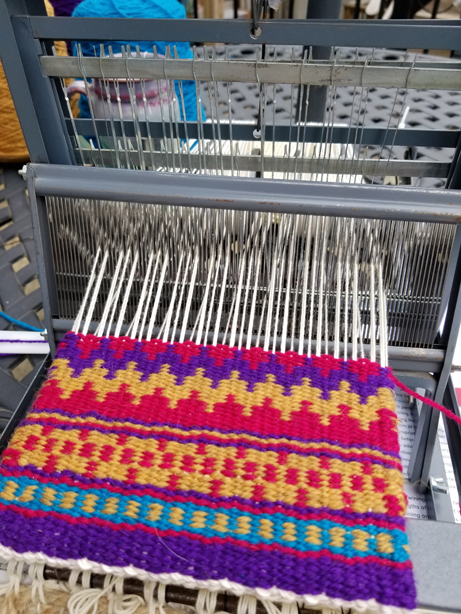
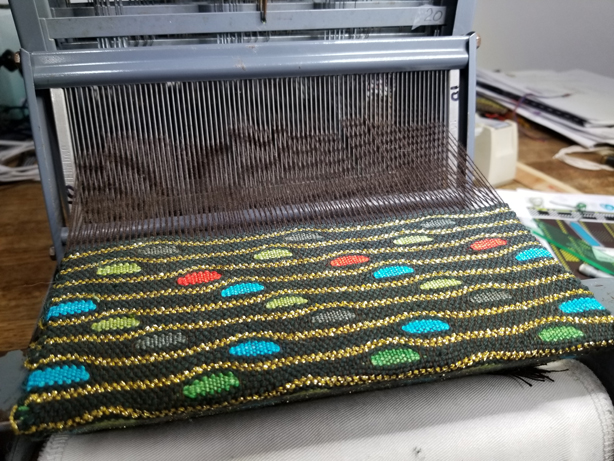
I was on a roll, and couldn’t go anywhere, so I cleared another Inkle loom, this one set up for turned Krokbragd. Both looms were donated to Jockey Hollow Weavers for their loaner loom program. Two more looms out of my studio.

Meanwhile, the gardens, in spite of no rain, (in spite of being sick, I still went out and watered the critical things) my tomatoes are prolific.

So I made a pot of sauce…

And that warp from hell? The one that wouldn’t end? I was determined…

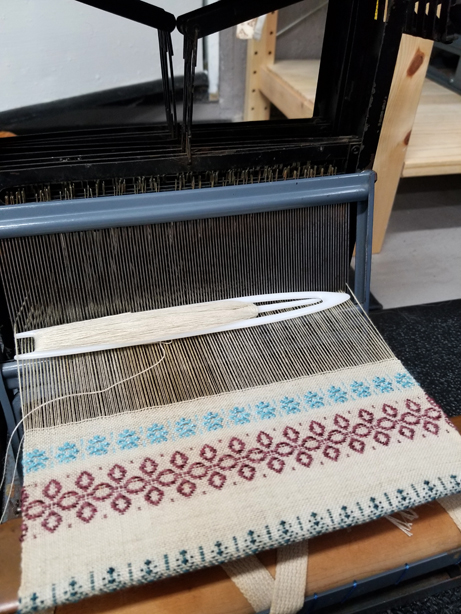
6 yards of 20/2 fine cotton. I initially worked through the Robyn Spady overshot sampler from a back issue of Handwoven Magazine, switching back and forth from Rose fashion to Star fashion, and then I just said, “Screw it”, and picked one of the patterns that appealed to me, and just wove. And wove. And wove…

So now I have this incredibly long sampler I will have to do something with. I think zip bags? At least a portion of it.

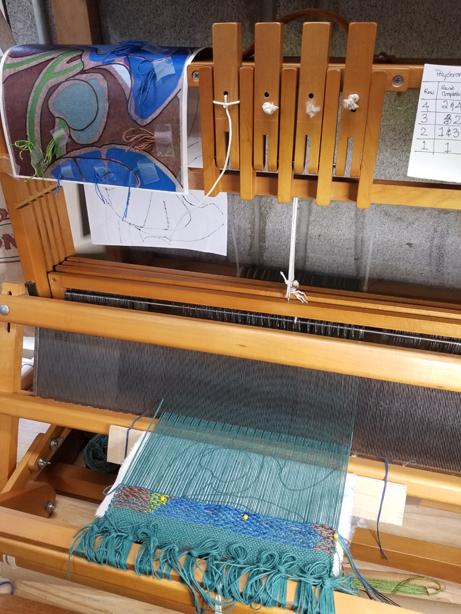
Which meant that I could move another warp onto that loom from my dwindling collection of Structos. I chose to move over an 8-shaft Quigley, the original pattern on the Structo I got from Tom Knisely’s book of Table Linens. It was designed by Diane Click and is a four-tied Unit Weave.

It is complicated to weave, and when I originally posted it on my blog, a couple of years ago, Diane actually wrote me, told me she taught a workshop in this structure at the 2015 Florida Tropical Weavers Guild conference (I’m pretty sure I was there teaching) and generously sent me her handout. Since I had already set the loom up, I didn’t do much with it, but now that I had the opportunity to rethread, bingo! Now I can work through her handout and really study the structure.

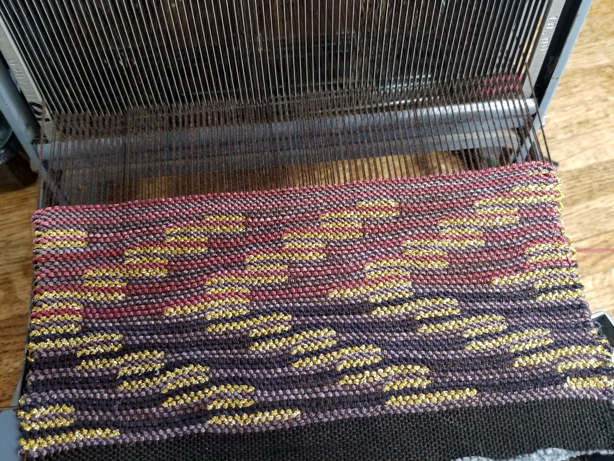
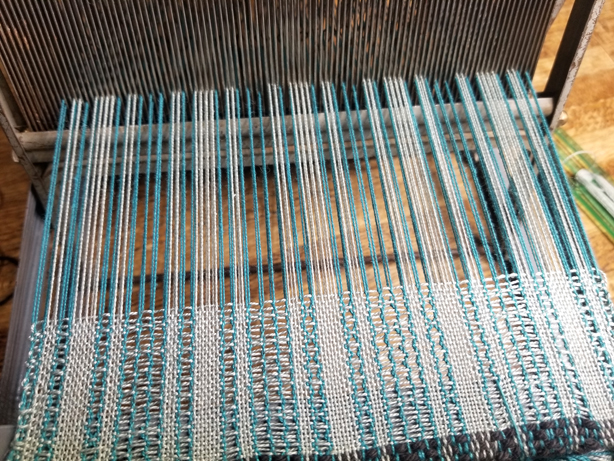
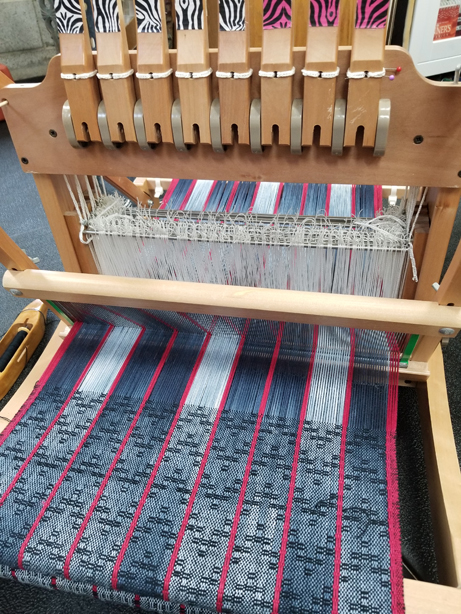
I was on a roll, and though I finally tested negative for Covid, I decided to move the warp on the 4-shaft Structo I had set up with Doup Leno. I wanted to prove to myself that I could weave Doup Leno on a Structo, but table looms are painfully slow, so once I moved the warp, I blew through a half yard in a sitting. This is 10/2 cotton.

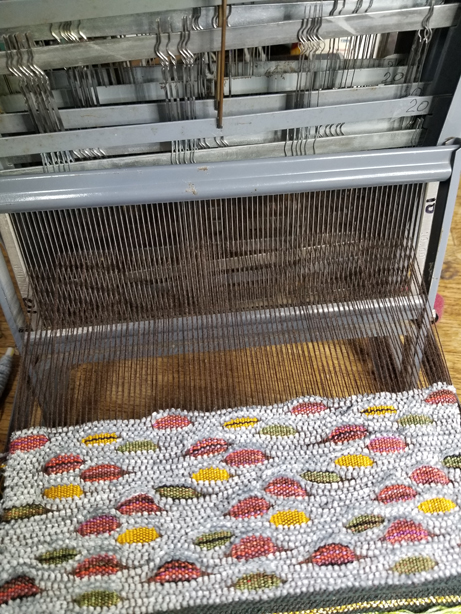
Then I decided to move the warp on another 8-shaft Structo with a Honeycomb draft, from Malin Selander’s Weave a Weave. Here is the original piece I cut off the Structo before I moved it to my 8 shaft 36″ floor loom.

This probably wasn’t my best idea, I should have waited for a smaller floor loom, but I wanted to reach out to my contact at FIT in NY who is patiently waiting for me to clear Structos. I wanted to make it worth the trip for her.

This is going to be a bit technical, so if you are not a weaver, just skip to the picture and move on. Malin Selander’s book is written for a sinking shed loom. I have rising shed jack looms. In a sinking shed loom, in Honeycomb, only one shaft gets pulled down at a time, the rest stay up. Easy treadling. (Though I’m curious because I’ve never seen an 8-shaft loom with a sinking shed, at least from the era the book was written). I have rising shed jack looms, like I said, which means, to have one shaft stay down, I have to lift 7, 36″ wide rock maple shafts. This is quite the workout. And yes, I could weave it upside down, but trust me, you don’t want to do that in Honeycomb. Cause I’m kind of designing as I go… Not only that, one of the designs in her Honeycomb sampler calls for 18 treadles. I have 10. It is easy to weave on a table loom, you just pull levers and engage the shafts you want. (There are 254 combinations of shafts in an 8-shaft loom) Not so easy on a floor loom. So I jumped down a rabbit hole, determined to figure out a skeleton tie up so I could use more than one foot, and get the tie-up down to 10 or less treadles.

There is an old program on the internet called Tim’s Treadle Reducer. I went there, and either it is no longer functioning, or I blew it up. If anyone knows its status, please let me know, it was a really handy tool. So I was on my own.

I sat with the draft for an hour or so, after transferring the tie-up for a rising shed loom. And slowly I worked it out to be able to use less than 10 treadles, two or three at a time, but set up in a way that one foot could press two at once, having the treadles adjacent to one another. I was pretty damn proud of myself. (I tweaked it further, shifting the plain weave to the middle, the photo shows the middle of my calculations.)

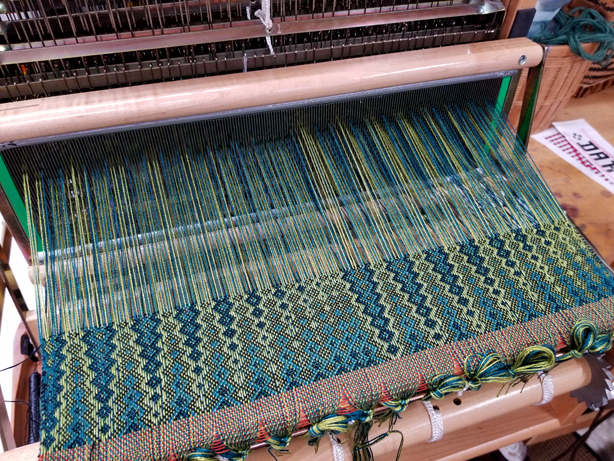
I haven’t woven that one yet, but this is a different design in her Honeycomb sampler, it is a very cool weave structure, but I’m going to be with this one for a while, since there are something like four yards on this 16/2 cotton warp.

Yesterday was an interesting day. First, it rained. We have been under extreme drought conditions here, I’m struggling daily to keep my plants alive, and Wednesday we planted another four dozen native bushes and perennials. It started raining Thursday night, resumed on Saturday, and well into this morning. I’m thinking we got more than 2″ of rain. For that I got on my knees and gave thanks to the universe for taking care of its own.

Secondly, if you own a PC with Windows 10, you probably know that October 15th is D Day. Microsoft will no longer support Windows 10 with security updates. Which is really problematic, leaving any computer with Windows 10 vulnerable. My tech guy came over yesterday, I was not going to try this myself, to upgrade my two computer systems to Windows 11.

Yeah, so the first computer, my laptop I use for teaching online, which I can annotate with a pen, set up in my studio, the processor in it won’t support Windows 11. So $1000 later, I have a new laptop on its way. Apparently the processor in my desk top computer will also not support Windows 11, but my tech guy, who is really brilliant, found a work around, and got everything on my desktop updated. Of course I have high anxiety knowing by the end of the week, I’ll be ripping my hair out making sure all my programs work on the new laptop, finding registration codes, passwords, etc., and getting a new code for Fiberworks. Which I definitely need that critical piece of computer software.

So one computer is safe and updated. And it rained. And I’m Covid free. And my sister didn’t get it. And my garden continues to delight and astound me. Leaves are starting to turn, things are beginning to die back. And I just cleared a number of looms, all going to good homes who will use them for teaching.

And I looked at the calendar and my eyes got really big, and I realized I have six weeks to make as much stuff as I can for the guild sale, inventory sheets are due the end of October. OMG! Fortunately I have a 5-yard plus Overshot sampler to start with…

Stay tuned…

But mommy, I want him…

I’m continuing on my attic cleaning and making more stuff for the guild sale with my mother lode of scraps of handwoven fabrics from the archives. I made two more squirrels, from leftover bits of mohair, and while I was working on the second one, I plopped the other one on the ironing board.
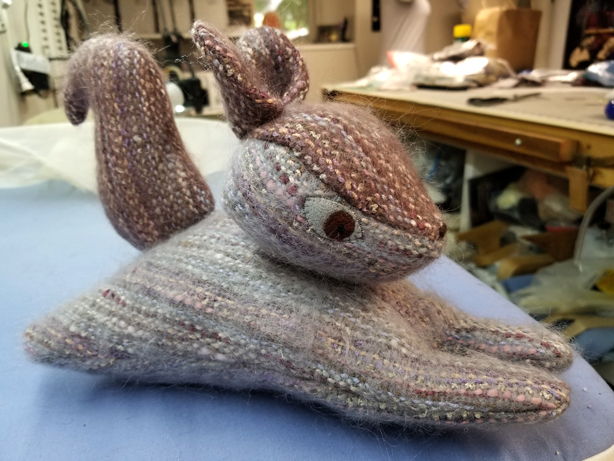
Mulder the studio cat of course had to check out something that looked suspiciously like what he hunts in the middle of the night…
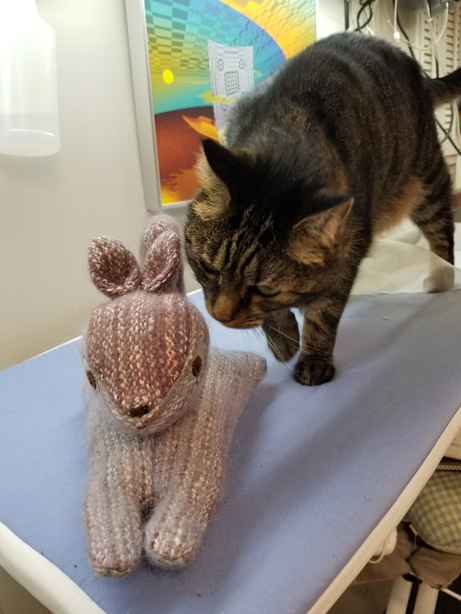
And typically had to check out the back end.
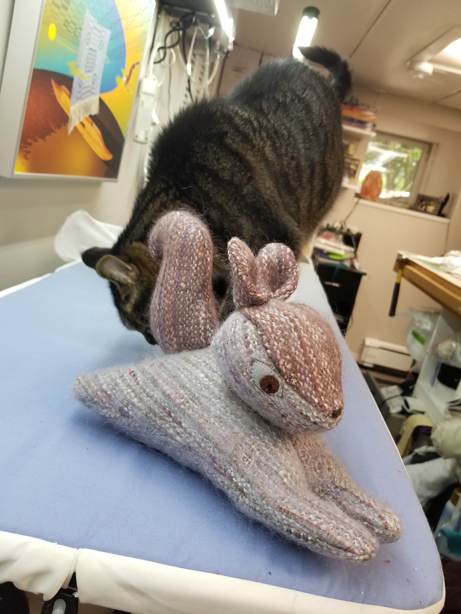
Satisfied said squirrel did not pose a threat, and being of a soft mohair and cuddly surface, Mulder decided to curl up next to him.
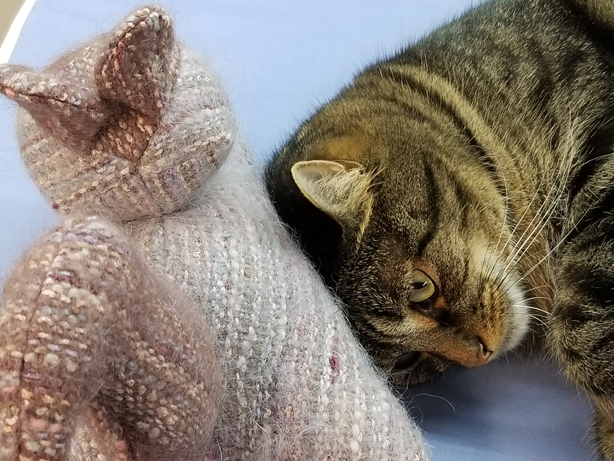
The face pleading, can I keep him, can I?
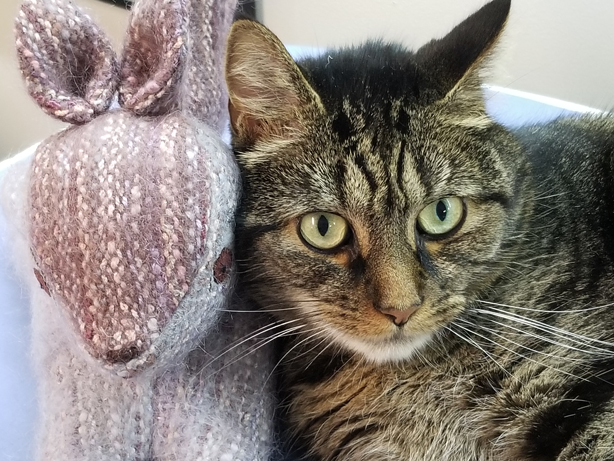
Sadly he can’t keep him, because the dogs would destroy the squirrels and anything else I have that’s stuffed in about 10 minutes. They gleefully dive right into anything with stuffing. So Mulder can’t have his little buddy…

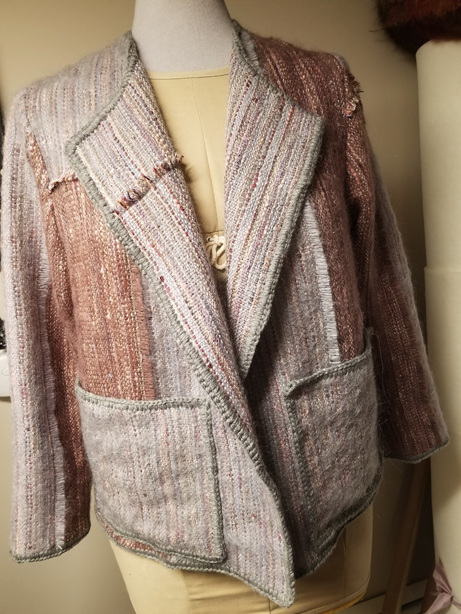
I’ve been able to create another jacket from the mohair scraps of a different colorway. I had a well meaning friend tell me they were really ugly, and that kind of stung, I rather liked them, and they were fun to make, and super functional, I’m hoping there is someone who will appreciate them at the guild sale.
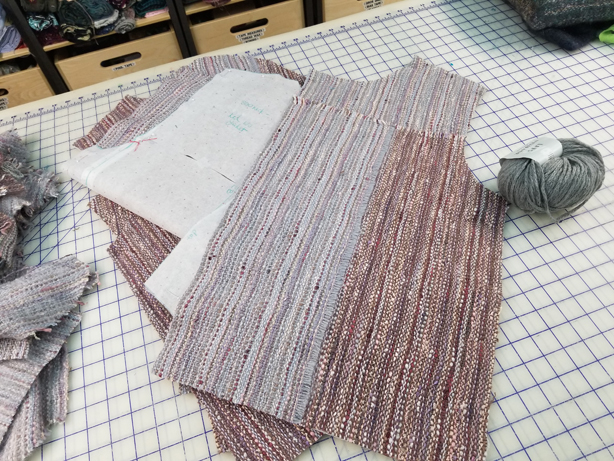
Almost ready for the final pressing…
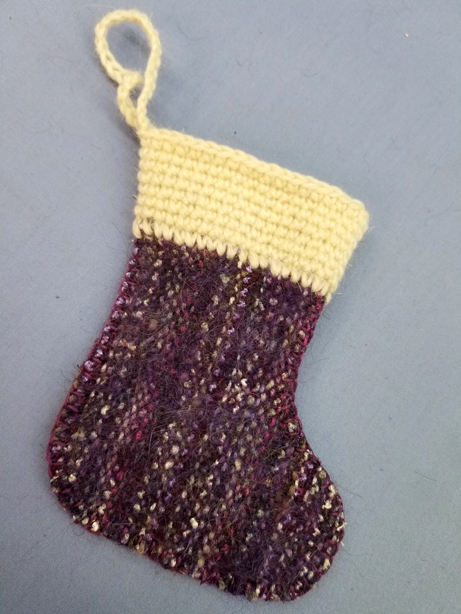
I worked out an alternative to the white mohair stocking ornament tops. I ran out of the white mohair fabric, so found a soft white yarn and just crocheted round and round…
And I cut out a dozen little bear ornaments for the guild sale. I spent hours looking through my vast button stash, trying to find three of something that would work for each of the bears, and getting them sewn on, making little “kits” so I can sit and put them together while on zoom meetings or listening to a podcast, or Textiles and Tea, whatever…
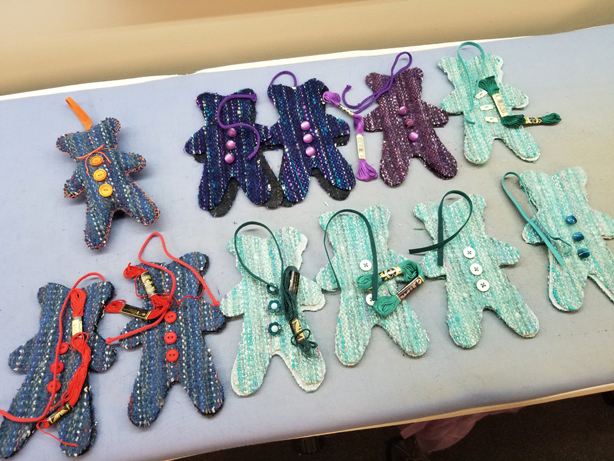
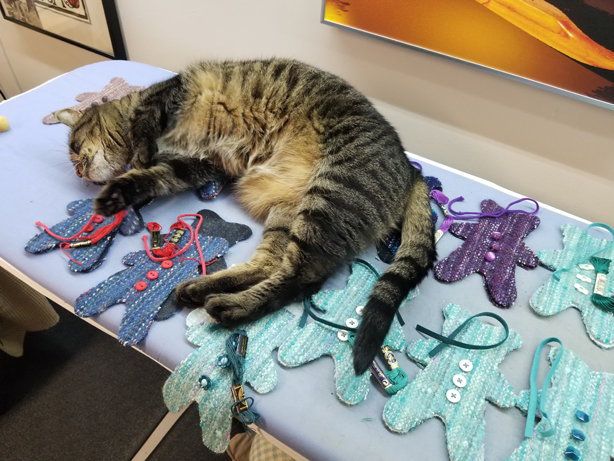
Of course my trusty studio assistant had to leap onto the ironing board and keep everything in order… Sigh…
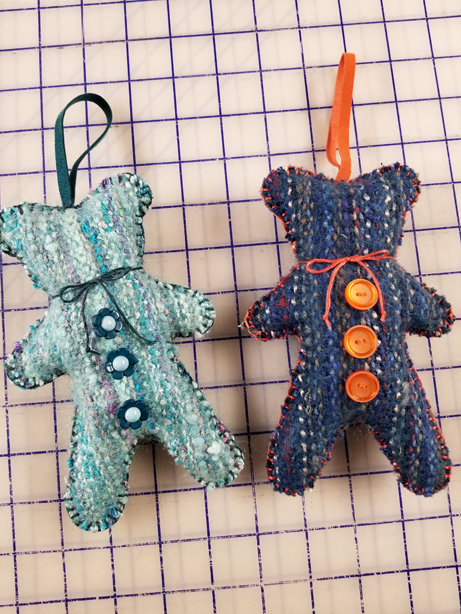
I managed to make two of them…
On Sunday, a local sheep farm, part of the NJ Fibershed, held a community dye day. A lot of work for the teacher Pamela Jenkins, a natural dyer from Maryland, and we had dyebaths to use with our pre mordanted yarns, (alum and cream of tartar) plus a station for botanical printing (results were disappointing, I think better compression would have helped) and a chance to use an indigo bath using Polygonum Tinctorium Indigo, which can grow in this climate. Interesting thing was using fresh leaves, and purĆ©eing them in a blender with ice. This is appealing to me, since I never wanted to start a fermented indigo vat. I don’t have indigo on the property so I’d have to plant some. I waited to rinse my skeins which were 65% silk and 35% wool, for about 48 hours, a suggestion by the teacher. They are now dry, and some of the color did wash out, but I’m sure the volume of dyestuff vs the amount of yarn/fabric we dyed, really wouldn’t yield strong results. Still, it is a pretty palette. Willow, fresh indigo, butternut husks, elderberry, hollyhock flowers, and artemisia.

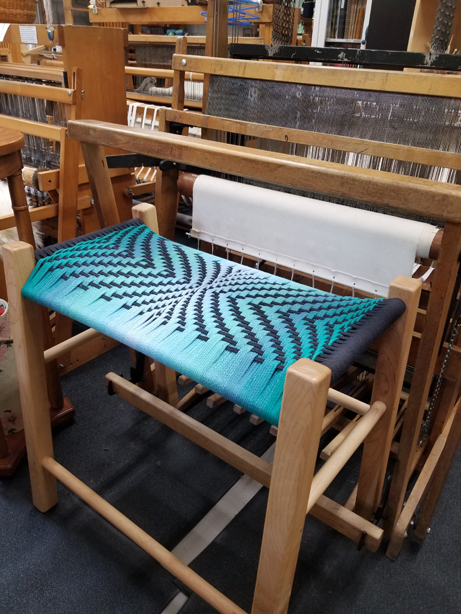
The day after I posted my last blog I got this gorgeous bench in the mail. Or rather shipped. I ordered my custom bench from Walt Turpening exactly a year ago. I wanted the gradation in the woven seat. Walt custom winds the cotton cordage to achieve the gradation. We spent a lot of time with measurements, loom and body, to determine the best bench height. Unfortunately the two looms I expect to use the bench with, are both empty. It is on my list this winter to get them both warped so I can try out the bench.
Meanwhile, I did finally clear the table loom with the Bateman blend. I didn’t get a lot of yardage, and it was really tedious. I’m happy with the results, and am thinking of designing a laptop slip case. I have one from Peru and want to copy how it was done.
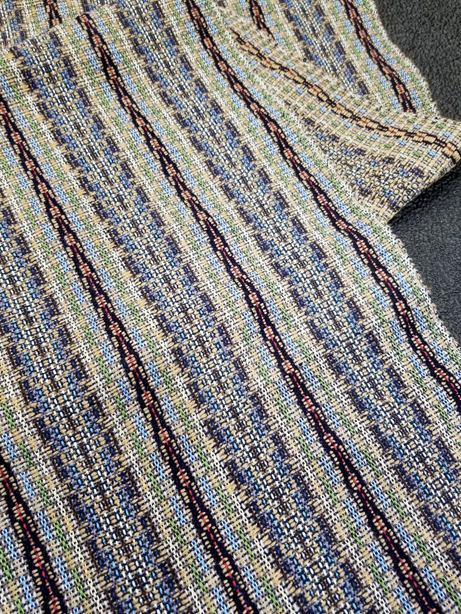
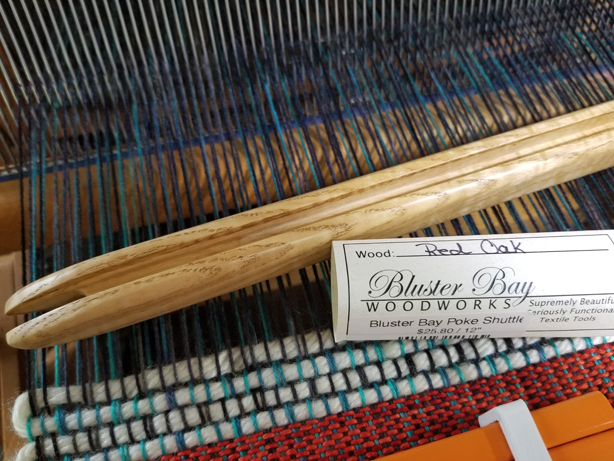
The loom next to it had a 4-shaft doup leno structure threaded on 8 shafts. I wrote an issue of Heddlecraft Magazine, (Issue #19) on doup leno, a technique where using half doups on shaft two allows the loom to crisscross certain threads creating an open airy structure that is very stable. The warp and wefts were hand-dyed cashmere so this is super soft. It seemed like the warp that never ended, and I finally got up and looked at my original drafting notes and realized I put five yards of warp on this little loom. Nearing the end of the warp, and wanting to squeeze in a couple fat yarns for headers, I discovered this cool tool that now I can’t live without. It is called a “Poke” Shuttle. I never heard of such a thing, but they were selling them in a few lengths at Red Stone Glen for their open house last June, made by Bluster Bay Shuttles. They just felt so lovely in the hand I bought three. The yarn just grips around the end of the shuttle allowing it to be able to poke through the narrow shed. It may have a different purpose, but I loved it for this task, and of course all Bluster Bay shuttles just melt in your hand…
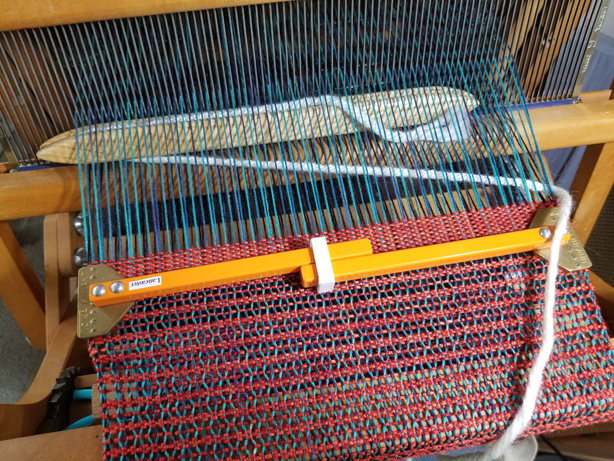
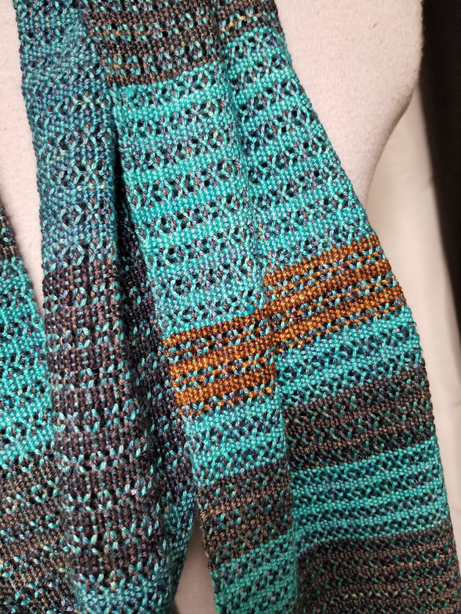
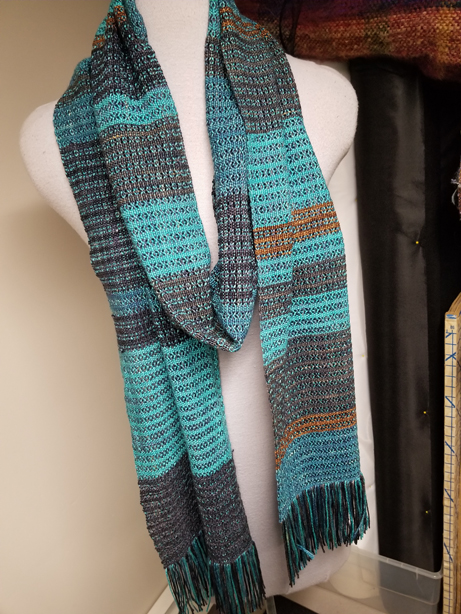
I managed to get a long scarf and a pretty cowl from the handdyed cashmere.
Meanwhile, my daughter is finishing up the edits in a video we shot last month, a one hour studio tour, which can be shown as a guild program. I wanted to recreate the studio tour I did for the HGA back in the fall of 2020 for Spinning and Weaving Week 2020, and wanted to document all the looms with warps. I am getting frequent texts with screen shots from my daughter down the hall with absolutely hilarious Transcription malfunctions. She first allows Adobe premiere to close caption the video, and then goes back and corrects. Textile terms in a transcription program are absolutely hilarious, looms become loons, and limbs, and lamps. Really, my diction is pretty spot on, you just have to increase your vocabulary sir! But the best Transcription malfunction I’ve ever seen is this…
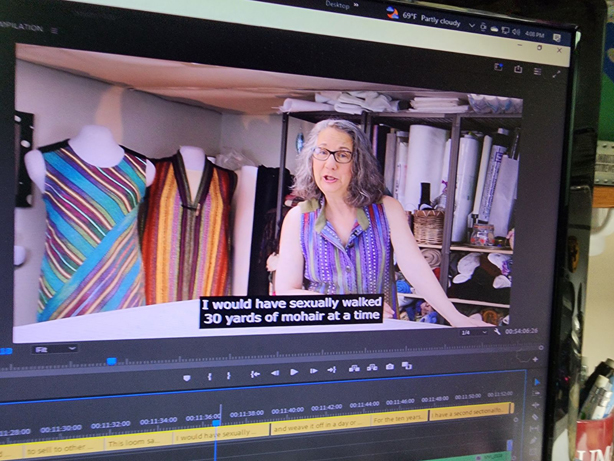
It is supposed to read, “I would have sectionally warped 30 yards of mohair at a time”. There are no words…

And to wind up this blog post, I’ve had a lovely wonderful thing happen this past week. Something I can’t even wrap my head around, and keep pinching myself to see if I dreamed it or not. Long story short, assuming this all happens the way it is spelled out in the contract sitting on my desk, next spring, County College of Morris will feature my huge body of work both artwork and garments, dating back to the 90’s in their Main Gallery, a retrospective of sorts, along with video, audio, and a hands on component (aren’t you glad I have all those Structos) for about 6 weeks, transitioning to a smaller gallery for their year end student exhibition, and then back to the Main Gallery to coincide with the Morris County Teen Arts Festival in May, where I am to be the keynote speaker. Then the exhibition of my work will continue on until the end of August. It is especially lovely that this is my county college, and that both of my kids took classes there, and I even taught there for a semester way back. I have hosted two externs from there as well. So this feels like a perfect conclusion to a lifetime of work in the field. I’m especially touched that they asked me to give the keynote to the next generation of creative people. I have a lot of work to do on that address.

I hope the fall brings you beautiful colors, cooler weather, fun things to do with fiber, and friends to do those fun things with… And no Mulder, you still can’t have the squirrel…

Stay tuned…
Derailed…

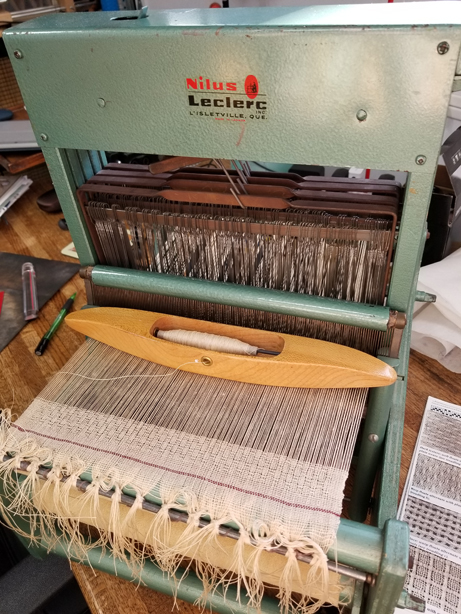
I had every intention of following up my last two posts with two more, because I was only halfway through talking about the 64 named looms in my studio and what’s on them. I had intended to just jump right into the Structos, which I have many, along with the five 10″ 4-shaft Leclerc Sample Looms.

But the universe had other ideas. Right after I posted my last blogs, apparently as best we can piece together, Microsoft did one of their famous security updates, which caused havoc over at Google (don’t ask me how I know this), and the end result was a suspension of my main business email account I’ve had since I could get a domain outside of AOL. Somewhere in the 90’s?

Because I started traveling a lot, and my late husband as well, for our jobs, my husband found a way to reroute my main email, theweaver@weaversew.com, which was part of a hosted platform, to IMAP through Google, allowing me to look at my email in my laptop, or tablet. This is before the invention of Apps. So for years, that email IMAP’d through Google, and all was well. Until about 10 days ago. When it became inaccessible. At first my tech support thought it would come back, that Google was scrambling, and all would be well. Then he tried updating my email program, Microsoft Outlook, and nothing would bring back accessibility.

As I freaked out, people close to me reminded me that no one died, and that I hadn’t lost my files and records, I just couldn’t email anyone and anyone who emailed me, the emails would bounce back as no such address. Some people called or texted and asked, WTF? I gave them an alternative email. I desperately thought about who needed to reach me in the next few days, like the tour company sponsoring my upcoming trip to Japan, I leave in a couple weeks. I thought about all the guilds I’m working with for upcoming lectures and workshops. I spent days trying to change my email address so I could be reached. I lay awake a nights haunted by MFA which is a nightmare, meaning Multi Factor Authentication, meaning each address change I could actual make happen, took 15 – 20 minutes with all the 2 factor authentication, email confirmations, snail mail letters generated, texts and whatever. I get the need for security, but this was ridiculous.

Anyway, I’m not out of the woods yet. I worked with my hosting company Pair.com (which by the way is incredible) and they gave me a multi page step by step on how to redirect the email off Google back to a hosted mailbox through my weaversew domain. Sounds complicated, I can assure you, I’m not so tech savvy and these last couple weeks have been my worst nightmare. (I know, there are a lot of things worse than this).

My tech support, who is probably the best in the state, is not so easy to get, largely because he is the best in the state… While waiting for him, I kept trying to figure out what to do, working with tutorials, working with my hosting company, and I was able to get my email working again, but not in my preferred email program Outlook. I spent hours trying to come up with the right set of settings or protocols to make it work. It didn’t help that two of my three email programs were affected, and that there were 11,000 emails in my inbox on my main email address, and apparently 5,000 emails in my back up gmail account. So I spent hours filling and sorting and deleting until I was down to almost nothing.

I was finally successful in getting the right settings and got both email accounts to work in Outlook, but only on my office computer. I was afraid to even start messing with my laptop. One thing at a time. Turns out that was a good move, because by the afternoon yesterday, all of my email folders I’d created over the years, disappeared. Gone. I’ve never been so devastated, and I’ve had some pretty crappy things happen in my life. “You should have backed everything up” was not helpful, because I didn’t know how. Because my laptop remained untouched by my successful transfer of the emails back to Outlook, my daughter and I successfully spent until about midnight last night, with my tech support logging in remotely, retrieving 33 GB (no that’s not a typo) of email data off my laptop, dating back to 2013? maybe beyond… So I have everything, at least I think I do, and my emails are all functioning. If you emailed me and got no response, I lost about a week of emails, they would have been returned to you. Try again.

I’m waiting for tech support to help me reinstall the 33 GB of data back into Outlook, but I have it. And those 11,000 plus emails? They are all back. I’m thrilled and yet devastated that I have to go through them again and sort, file and delete.

I wanted to title this post For the Win, part 3, but I wasn’t sure if I felt like I won anything anymore. My filling all my looms seems rather anti-climactic. Nevertheless, I’m going to plow forth, and document anyway, so bear with me, because at the time (2 weeks ago) this was a big milestone for me. I’ve already cleared one of the floor looms I talked about in my last posts, so before I clear anything else, here is the list.

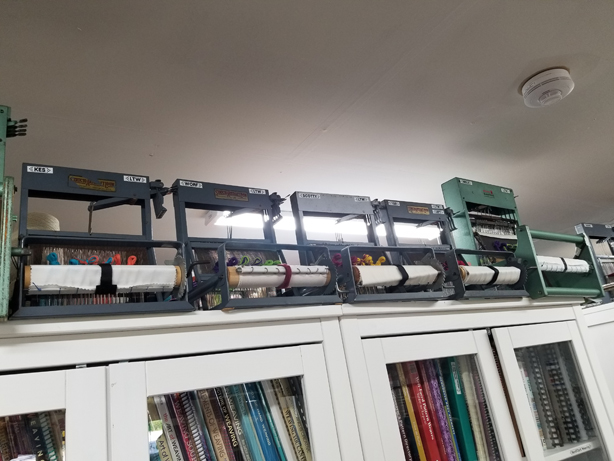
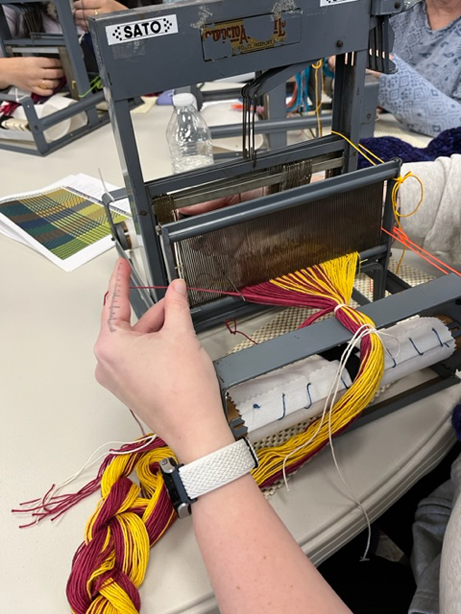
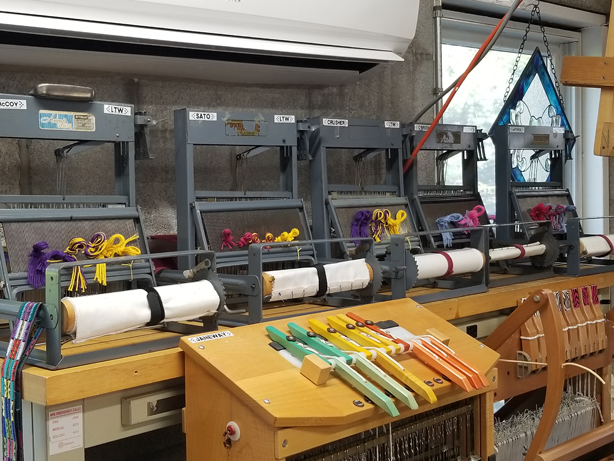
The first 13 Structos and 2 Leclerc sample looms are all set up and ready to go for a Learn To Weave program I do annually, and they can be used for any demos my daughter and I should encounter during the year. They live up on shelves around the studio patiently waiting. But they are all warped thanks to the class we taught at my guild in January. Their names, all after Star Trek characters, are “Yar, Worf, McCoy, Sato, Kes, Chekov, Uhura, O’Brian, Bashir, Troy, Scotty, Crusher, and LaForge“. The two Leclerc looms are “Neelix and Phlox“.

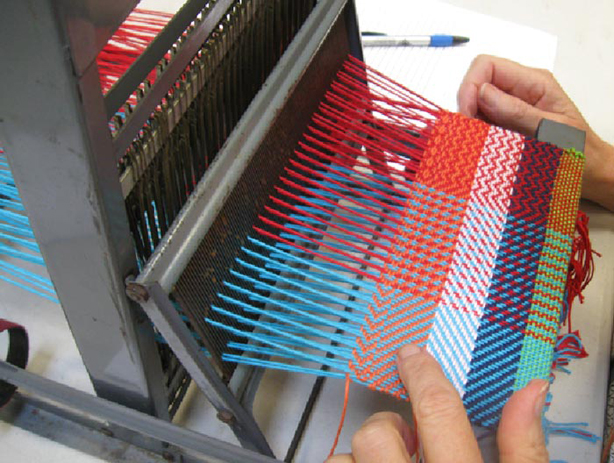
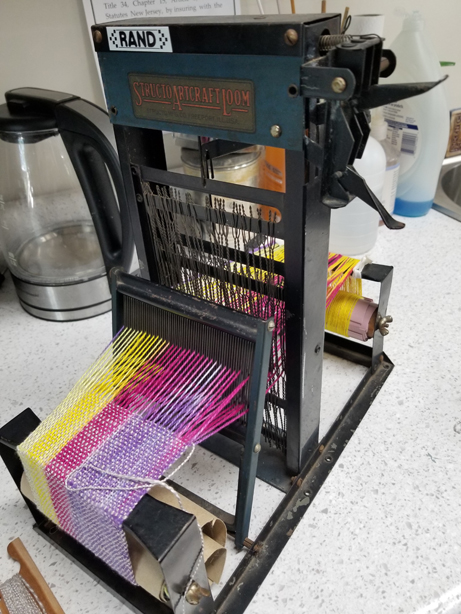
I also have a baby 2 shaft Structo named “Rand” that is only 4″ wide. I keep that set up with a handpainted warp, because it is really helpful to be able to explain how a loom works, with one that is set up, and help students identify the different parts of the loom.

The other three Leclerc Sample Looms are “Lursa“, a 4 shaft loom with a Huck sampler from an article titled “Stuck on Huck / 4 shaft Library” by Lynn Tedder from Best of Weaver’s Huck Lace, edited by Madelyn van der Hoogt.

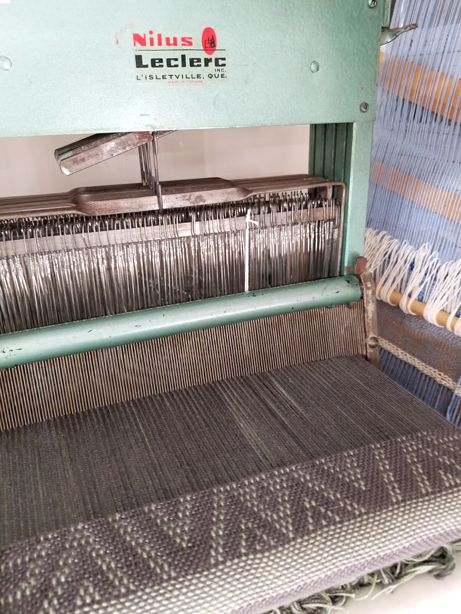
Bettor” has a 4 shaft doubleweave sampler from Jennifer Moore’s Doubleweave, but I used the threading from Ursina Arn-Grischott’s book Doubleweave on Four to Eight Shafts. I don’t know why I did that, for a challenge maybe? It hurts my head…

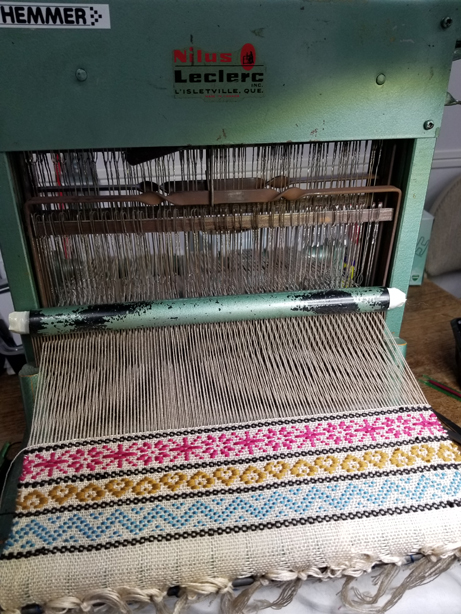
And “Hemmer“, which I talked about in a recent post, another 4 shaft loom, threaded in a straight draw (I think), intended for intense pick up. I found a booklet from Elizabeth Tritthart, historicweaving.com called 100 Horizontal Stripes. I love this one, and yes, it is really slow cloth, tedious as most pick up is, but you really can lose yourself in it and take pride in seeing the design build. And it uses up embroidery floss!

The remaining dozen Structos have cool drafts and structures on them, and I periodically pull one out and just weave. I can take one easily onto the deck and weave outside! The documentation on each one is important, because I have to remind myself each time what I’m doing, where I am in the draft, and how it even works. I have a guild mate, a relatively new weaver, who comes once a week to explore a different loom. It helps to teach it, and we work out together what a newer weaver understands and doesn’t understand.

If you are still with me on this… in no particular order…

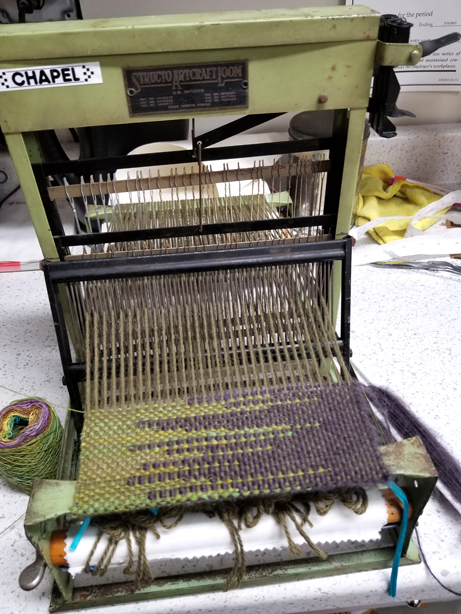
This little 2-shaft loom, “Chapel” was pulled out of the attic for parts, and I decided to set up a simple clasped weft technique after a workshop with Deborah Jarchow.

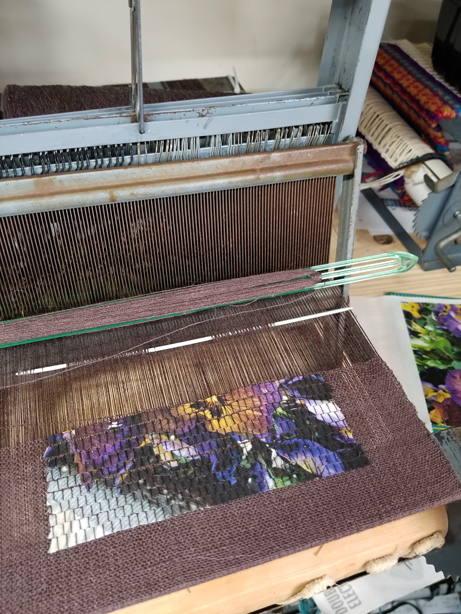
Dax” has a 4-shaft Theo Moorman threading, which allows me to weave narrow strips of silk habotai, printed with an image in an ink jet printer, on a linen ground, using sewing thread as the tie-downs. I have a monograph on the subject, including step by step how I do this technique. This is a photo of pansies.

Picard” is an 8-shaft Structo, threaded for a 4-tie pattern called Quigley, which I’d woven in a class with Madelyn van der Hoogt, and loved. This particular pattern was designed by Diane Click and is found in Tom Knisely’s Handwoven Table Linens book.

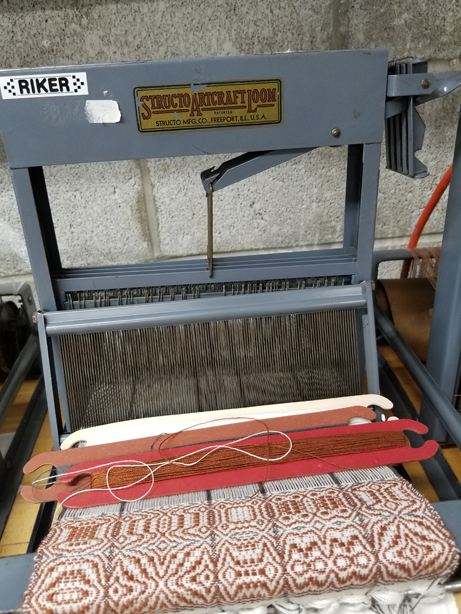
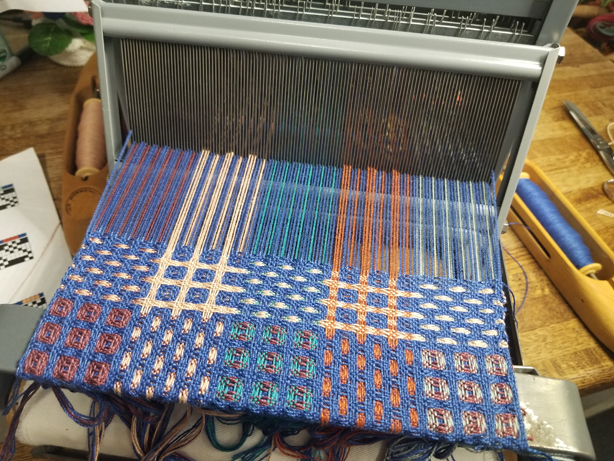
Riker” has a 4-shaft overshot gamp, adapted from a draft by Robyn Spady in the May/June 2014 issue of Handwoven Magazine. Robyn does great gamps! I love Gamps, I define them as a sampler that works like a grid, each vertical stripe is threaded in a specific pattern, and each horizontal stripe is a specific lift plan, and the intersections of each creates stunningly different patterns.

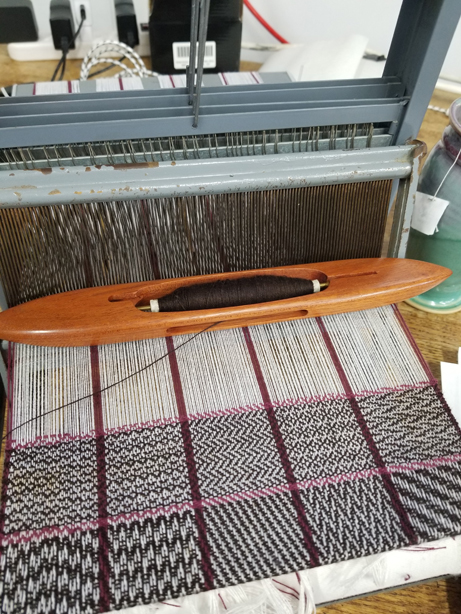
Sulu” has a 4 shaft twill variation on a twill color gamp, again by Robyn Spady in Handwoven Magazine, November/December 2008. Getting the beat correct so the twill lines move at a 45 degree angle is harder than it looks.

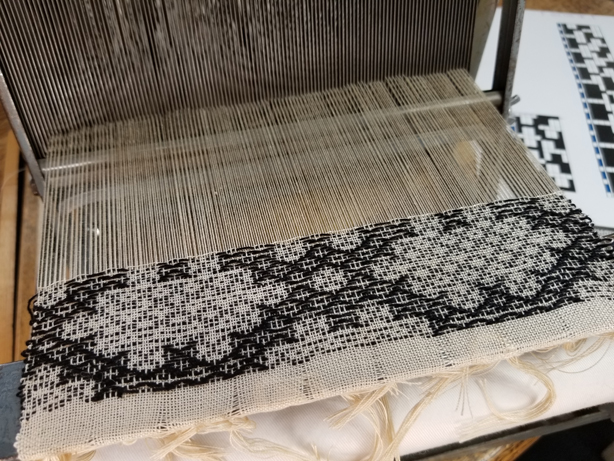
Kira” has only 3 shafts. This is an amazing structure on only 3-shafts. It is a rug technique called Krokbragd, which no one can pronounce, but it is gorgeous, and also very tedious. This draft is from an article Vakker Mug Rugs, by Anu Bhatia, in Handwoven Magazine, May/June 2022.

Archer” has a structure called Deflected Doubleweave, this one is on 8 shafts. I drafted this from the Marian Stubenitsky’s book, Double with a Twist. The real beauty of this cloth will come out after it is washed, when the yarns in the structure deflect into each other. The yarns are 8/2 Tencel.

Burnham” has an 8 shaft Rosepath point twill threading. Carol Strickler’s book, A Weaver’s Book of 8-Shaft Patterns, has pages of little Rosepath designs, which are so much fun to weave.

Kirk” has an 8-shaft Honeycomb threading, taken from a sampler in Malin Selander’s Weave a Weave. I’ve done three of the five variations, and within each of the variations are even more variations. These are really fun. They are named after operas, the first is Tosca, followed by Aida, and then Isolde.

We are getting there! If you are still reading I’m impressed. Remember I said a couple posts back, this documentary is for my benefit, a place to remember when I warped all the looms, with pretty pictures…

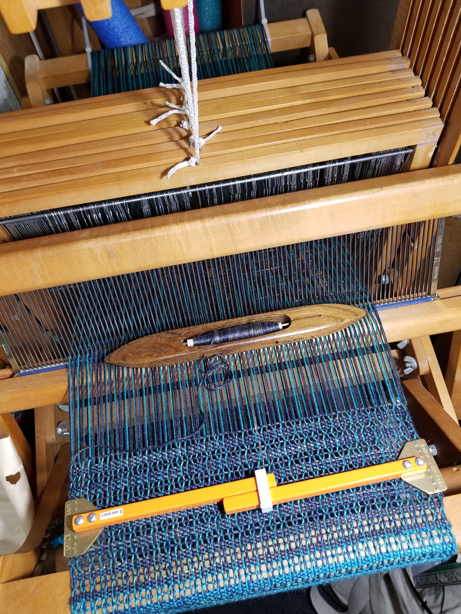
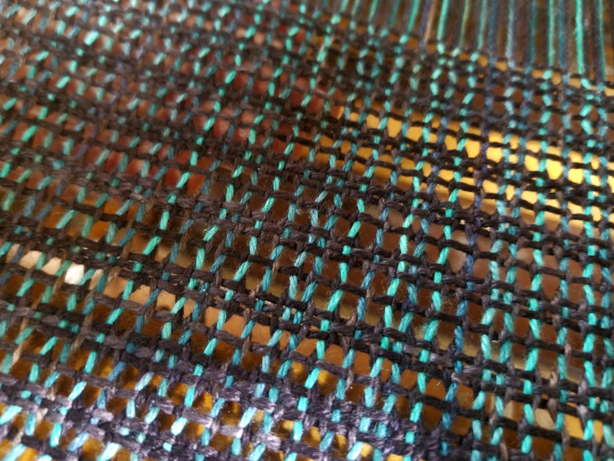
Reed” has a 4 shaft Doup Leno threaded onto it. I wrote an entire issue of Heddlecraft Magazine Issue #19, on the subject. It is hard to see what’s happening in this small of a scale, but the lacy fabric is structurally sound because the turquoise warp threads twist back and forth because of a series of half heddles or doups.

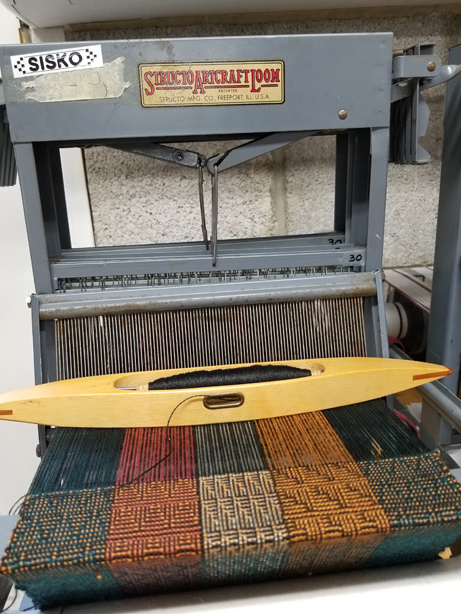
Sisko” has an 8 shaft Shadow Weave on from a draft by Joanne Wood Peters. You can purchase the draft from Webs, it is Valley Yarns draft #199, called Shadow Weave Sampler. The yarns are 8/2 Tencel.

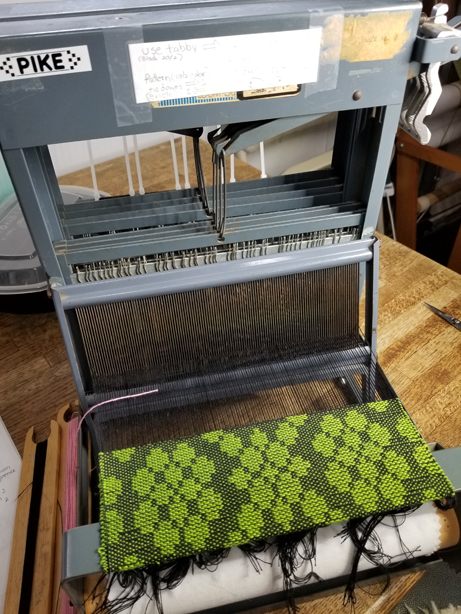
And last, but not least, (because there are ton more “other” looms, like Inkle Looms, still to document), is “Pike“. He has an 8 shaft Summer Winter motif, heavily adapted from a draft I think I got from Madelyn van der Hoogt in her class. I had to rework it to fit the size of the Structo.

I know this is a long post, but like I said, this is my journal and I wanted to document something I was proud of. And I’m glad I did, because I feel like the entire email debacle pales as I look at all these images. The data is there, it will eventually get migrated back where it belongs, mostly. My greatest joyful moments come when I figure out something fun or cool in the studio. They are what keep me getting up in the morning, that and the cat sitting on my face, and I’m so grateful to have this craft, the looms, the yarns, and the library of reference books to sit and pour over while I drink tea.

Stay tuned…
For the win part 2…

It is rare that I write posts back to back, most subscribers don’t want me filling up their inboxes with emails about a new blog post. But I’m on a role, and it is important to me to document this moment, with all the looms in my possession warped. It is a ridiculous amount of looms, I admit, but I’ve been asked if I had to downsize, which one would I pick. I can’t answer that. Each loom has a purpose. Until I have to move, or can’t weave anymore, they are all staying as a happy family. After my husband died, I went through a brief period of really evaluating all of my fiber holdings, especially since I am an educator and have 15 of everything, 15 drop spindles, 15 dog slickers for hand carding locks, 15 small frame looms, 15 inkle looms, etc. My daughter who caught me contemplating this, declared that I couldn’t get rid of anything because well, it would all be hers when I die. Did I mention she holds on to stuff like her father? With that idea of downsizing nixed, I just began to add to the mix when the opportunity presented itself.

So to continue the loom inventory from yesterday’s post, here are the main table looms. Starting with the Tools of the Trade looms, all are 25″ wide except this one, which is only 16″ wide and an 8 shaft. I really love Tools of the Trade table looms, they fold for easy transport, are quite sturdy, have metal gears, and the back of the loom drops away with the removal of two bolts making threading a dream.

This 16″ loom I found on eBay, years ago, and had shipped from maybe the Chicago area. I’m bad at keeping the provenance of my used looms. The outside castle frame turns out was a bit bowed, and shafts would slip out of the tracks, but I moistened the wood and put a huge pipe clamp on the side walls of the loom and that stayed on like a brace for a couple of years. It is fine now. Looms for the most part are pretty indestructible, though truth be told I’ve seen some pretty horrific mistreatment. Anyway, its name is “EMH” (from Star Trek Voyager, meaning Emergency Medical Hologram). I probably wouldn’t have picked that name, but my daughter loves to print labels, and is a Trekkie, so it is a magical combination. I don’t interfere. On it is a four shaft Doup Leno spread over 8 shafts. I use it when I’m demoing for an online class. The yarn is all handdyed cashmere I think, there was no label on it, but it is buttery soft, and took the acid dye well. Once the tension is released, it should collapse into a soft airy scarf. I think this will be one of my priorities to clear. I wrote a Heddlecraft issue on the subject of Doup Leno, issue #19.

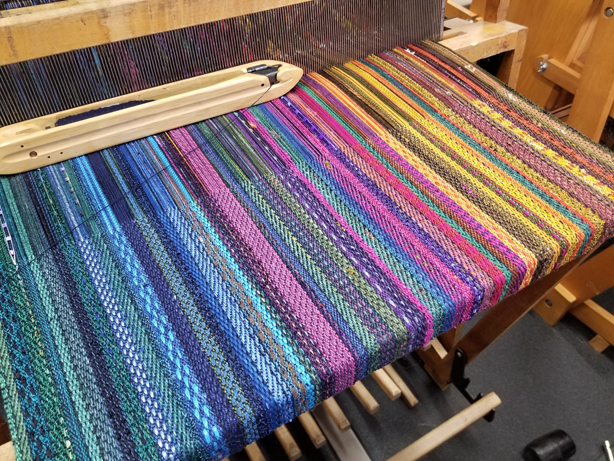
Next to it is also an 8 shaft, but this one is 25″ wide. I remember buying this from my guild, because no one liked the loom, they thought it was heavy and awkward. My guild, Jockey Hollow Weavers, has loaner looms available and no one was using it, so they offered it to me and I paid a chunk of money to have another 8 shaft loom. It is precisely why I liked the loom so much, it is heavy and therefore sturdy. I can tighten that warp as dense as I want. This loom is named “Chakotay” (Star Trek Voyager) and on it is a Bateman Blend, #110, which I set up for the issue I wrote for Heddlecraft Magazine, issue #38, on combination weaves. I sampled, cut it off and washed it, photographed it for the magazine, and started weaving again. I don’t remember how many yards I put on, it is slow weaving, but beautiful cloth.

I talked about “Kim” in yesterday’s post, which has the Rep weave experiment. I ended up cutting off what I wove, washing it, tossing it in a hot dryer to see how much it would draw up. I’m happy enough with the cloth that I’ll leave it sett at 32 ends per inch. I laid awake last night thinking I should try to resley, but I’m glad I looked at the cloth after washing. Always a good thing. It is still slightly damp, so the color is probably a little richer than it will ultimately end up.

I have another 8 shaft Tools of the Trade table loom, also 25″ wide, and I have a vague recollection of helping someone who rescued this loom and refurbished it, with lots of pictures and support, and ultimately purchased it from her. I think my sister lived near her and did a pick up for me. There may be a series of emails somewhere in the archives, but that really doesn’t matter to me. I love the loom, and I think this one is cherry. Its name is “Tuvok” (also from Voyager) and though it is 8 shafts, my daughter set it up for a four shaft Split Shed workshop we took together back in the fall of 2019, with Deborah Silver. We each set up my two 8-shaft Tools of the Table looms, because I think the 4-shaft looms were busy. Her loom still has the warp on it from the workshop, so it isn’t mine to touch, but here are the samples that are on it so far. I would love to have the 8 shafts back in rotation again, but I have enough other looms to keep me busy.

I needed my 8-shaft Tools of the Trade set up for the Split Shed weaving class for the Bateman sample I talked about above. Because the Tools of the Trade looms are basically interchangeable, except for the size of the castle, I was able to preserve the leftover warp on “Chakotay“, by just swapping out the entire back of the loom with a 4-shaft named “Paris” (again from Voyager), so I could continue the technique. So now, my Split Shed warp is on a more appropriate 4-shaft loom, and I started a complicated design, which will probably take the rest of my life to weave off, and truth be told, I should have put on a different warp than the green carpet warp for the class, but I can recall the technique easily by sitting down at the loom.

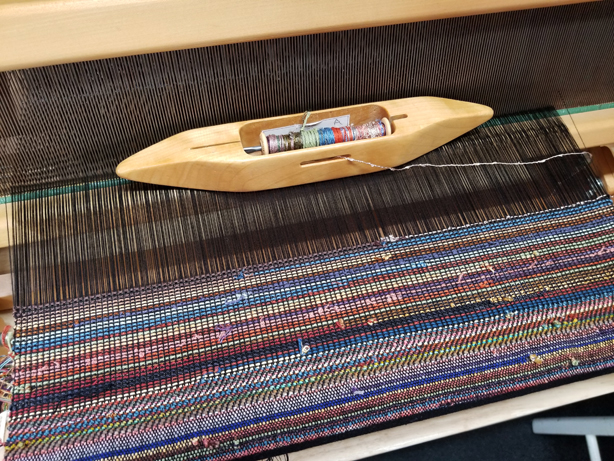
The last of the Tools of the Trade table looms is one I set up just a couple weeks ago. It is for Zanshi fabric, which is a Japanese philosophy of wasting nothing. I wove a length of cloth in this technique a couple years ago, since I spent an inordinate amount of time in Zoom meetings at the start of the Pandemic, and just sat and tied all my thrums or loom waste together into balls. Simple overhand knots. The resulting balls get woven in a basic ground warp, knots and all, and I wove off the length of yardage in record time.

I wanted another warp to weave my endless stash of Zanshi thrums, so I set up the last of the 4-shaft Tools of the Trade table looms, “Torres” (again, from Voyager) with a fine black 10/2 cotton, and experimented with a couple different structures, plain weave, twill, ultimately settling on a rib weave, which is two shuttles. If nothing else, this should slow me down.

I should also mention that there are a couple of additional table looms in the studio, two of them are Leclerc looms, one a 12-shaft Dorothy, which my daughter bought from the estate sale of one of our own beloved guild members. She calls it “Data“. Right now it is the only loom without a warp, because it is my daughter’s and not mine to warp.

The other Leclerc is a folding Voyager, 16″ wide, also 12-shaft. We named this one “Janeway“. I bought it from another guild member, who is buying and selling looms all the time. I don’t think I ever sold a loom that came through the studio, I almost did once, but changed my mind at the last minute. My first Tools of the Trade 4 shaft table loom. I did permanently loan someone a loom, another Dorothy, a young weaver that needed a jump start, and I had a wooden Structo that got beat up in the garage before it was my studio, that I donated to someone in the guild who vowed to clean it up, but now that I have a real space for all these looms, I’m careful to protect each one. Anyway, “Janeway” has a 12 shaft Echo weave on it, which I wrote about just a couple of posts back. (The draft is fromĀ Denise Kovnat, from her collection of WIF files for Echo Weave available on her website. This is a variation.)

And finally my daughter’s folding 8 shaft Ashford table loom. When she went off to college in 2011, she wanted a loom to take with her. Friends suggested a rigid heddle and she looked at me like I had three heads. “Why would I want a rigid heddle loom when I can turn a jack loom into shaft switching!”, she declared. So the folding Ashford 8 shaft was her go to loom away at college for four years. It has seen a lot of yardage, because she is my daughter and that’s what we do. Unless we are specifically weaving towels, we never have a plan for what we weave. All that comes later. So, this is “Spock“, her first love in Star Trek, and her first loom of her own. Right now there is a warp that’s been there a while, from a couple of hand painted warps she procured from a Kathrin Webber class in my guild a number of years ago, and says that the 8-shaft structure is a modified Atwater Bronson from Strickler. Whatever she says.

I should mention the one remaining floor loom in the studio that isn’t a Tools of the Trade and caused a lot of Sturm Und Drang when it first came to me in very poor condition. I spent a lot of money rehabbing it, much to the consternation of the other looms, but they all seem to get along now, and each has its purpose. This one is a 25″ 8 shaft Macomber from the 1970’s. It is a full size loom with two warp beams. We call it “Mac“. Because it is a Macomber after all. I’ve never been a huge fan of Macomber looms, but this one does get the job done, and after all these years it is still a workhorse. And it was the loom that got me weaving one armed when I broke my shoulder the end of 2021. Right now I have an 8 shaft combination warp on it, from my 12-shaft draft I wrote for Heddlecraft Magazine, issue #38, which upon studying closer I found I could convert to 8 shafts easily. Sometimes I just amaze myself. Most of the yarns are hand dyed, which is something I tend to do in the dark winter months.

The rest of the looms are my collection of 26 Structos, and 5 Leclerc Sample looms, and multiple inkle looms including a Gilmore Wave, and one from John Mullarkey, all named after Star Trek characters. I’ll cover them in a follow up post, because they are all warped, or most of the inkle looms anyway, some are on loan to a guild mate who is doing a program for our guild.

Definitely stay tuned…
All on account of…

My friend came to visit this afternoon. She said, “You haven’t posted in a while, I keep checking… I miss your posts…” My friend isn’t a weaver, has no sewing skills. We are musicians together, and raised our kids together, but she loves reading my posts. Who knew?… So, I promised her I’d sit down tonight and post one. And I was shocked at how behind I was on all the interesting goings on in my neck of the woods.

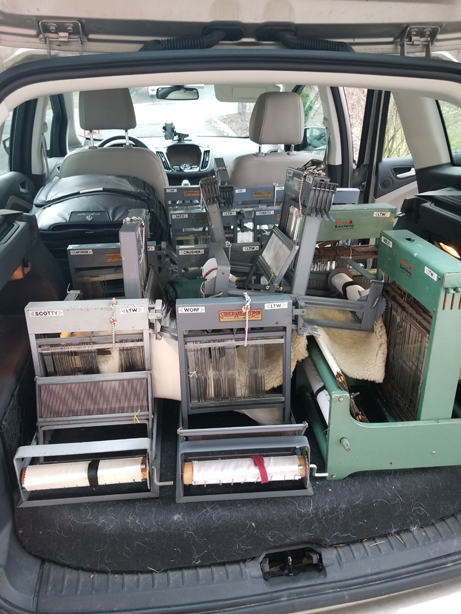
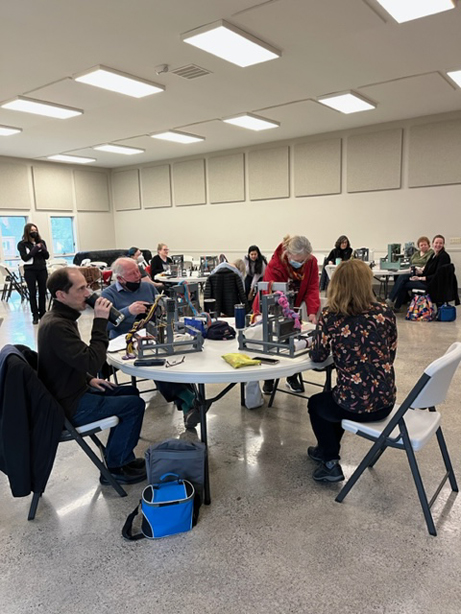
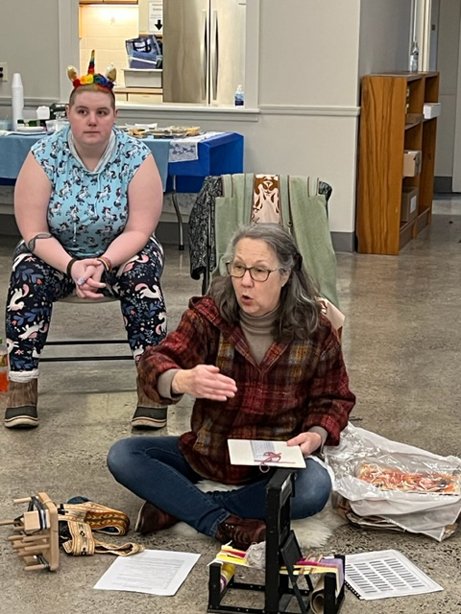
I made it through the holidays. They were quiet and somewhat challenging, but this is January, and a fresh start, and unlike this time last year, my shoulder is mostly healed and I’m carrying on. But January, after a couple of years break for Covid, means it is time to buckle down and do the final preparation for the Learn To Weave Class that I teach for my weaving guild, the Jockey Hollow Weavers. I spent the last few months rehabbing a number of additional small Structo looms I had acquired, and though the looms were ready to go, I had to wind 16 warps (I wind two at a time, cross at both ends and cut in half), and print all the handouts, and of course packing and loading the car. All on account of I had agreed to do this. I always ask myself why, until I’m actually doing it and I realize why I agreed to it and how much I love it.

We ended up with 14 students after a number of last minute cancellations, mostly from people not feeling well and terrified of spreading something nasty to fellow weavers. In the past no one would have thought twice about coming with a little cold or cough. But I appreciated the caution, and to my knowledge everyone from the class was and still is healthy.

So I give them each a small 4 shaft loom for the day. Most have no previous weaving experience, though a few are rigid heddle weavers, wondering what the shaft experience is all about. I prewind a warp from 8/4 cotton, in two colors, with a striped section in between, and they sley the reed, thread the loom according to the draft I give them, which has a point threading and straight draw, learn to read a draft, and weave off a small sampler of all the cool structures you can do on that point threading and straight draw. In one day. They work hard, and learn a lot.

Usually they either kindly thank me for opening their eyes to the work involved in weaving, or they want to jump right down that rabbit hole and immediately join the guild and borrow loaner equipment and become our newest weavers. I already have three who have since joined the guild. And one discovered a two shaft structo loom hiding in her basement purchased from some consignment shop years ago. It is only 2 shaft but she is on her way. These were her samples.

All on account of I did something really really dumb, something I’ve never done in 35 years of teaching, I double booked the day. Apparently back in May, I agreed to pencil in a date to give a lecture for a guild in Oregon. The same day as the Learn to Weave class. Which wasn’t officially in my calendar at the time. I didn’t hear back from the guild until the end of December with final plans. That’s not unusual, but what was highly unusual was there was no record of the lecture in my calendar. I never ever make that mistake. They couldn’t switch speakers from another month, and I’m too professional to just say, “sorry…”, so my daughter and I decided to actually film a video on the topic of What to Do with Leftovers, which was what the guild had asked me to lecture on. I scripted it, used the slides from the original presentation, and we created a YouTube video, about 48 minutes long, which I offered to the guild for free as compensation. I admitted to them they were basically doing a beta trial for me, so I didn’t feel like I wasn’t benefiting from the experience myself.

There were some technical challenges streaming the video, my daughter worked with them to try to iron out any issues. This was a guild who was not only showing the video to the in person meeting, but to those out in Zoom Land who were tuning in. That in itself presented challenges. I was on pins and needles all afternoon during the Learn to Weave class, hoping we wouldn’t get a call that they couldn’t get it to work, or something technical went wrong and they didn’t have a program. In the end, it all worked well. I heard they loved it, there was laughter all through the video, something about my deadpan comedic expressions (all my daughter’s clever editing, I can assure you) and applause at the end. They told me it was one of their best meetings. The palpable relief at the end of a successful Learn to Weave class and a successful guild lecture happening at the same time, was incredible. All on account of I screwed up.

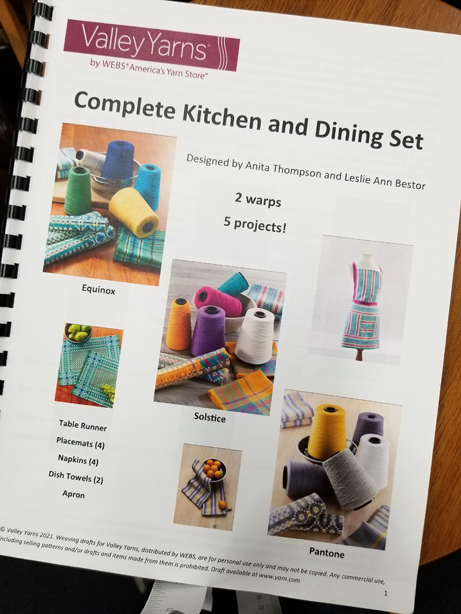
Last year I saw this lovely project download on Webs (www.yarn.com) that had kitchen and dining room textiles, in three color ways. The structure for the striking mats and runner was Summer and Winter on 6 shafts. I bought the download and printed it. It called for 8/2 cotton, which I had a tonnage of…

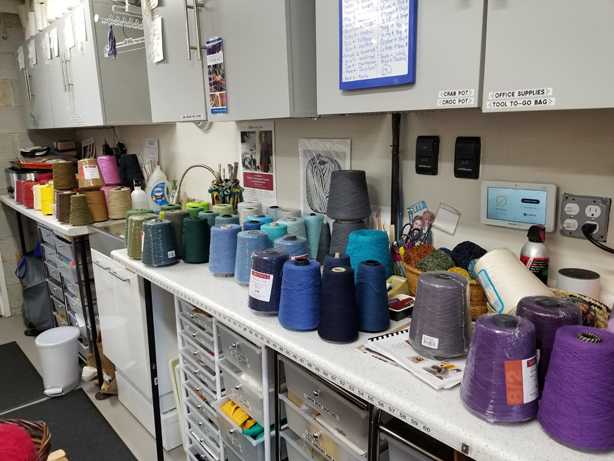
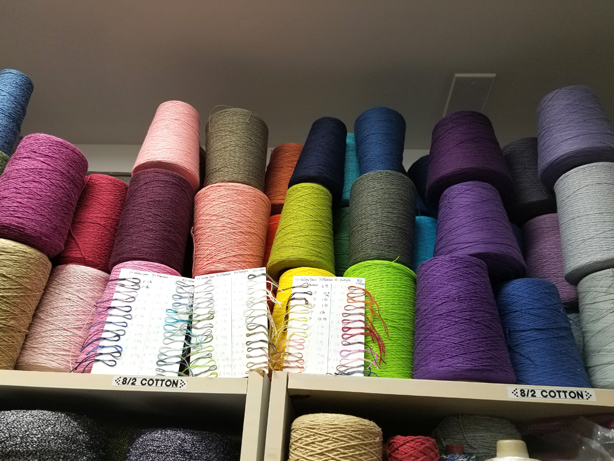
It was all on account of I couldn’t see what I actually had because the cones were all stacked to the ceiling on top of the wall units four deep. So I had my daughter climb up and pass me down all the cones, which I lined up on the dye sink counter so I could start keeping a log of what I had, where it was from and how much of each color I had.

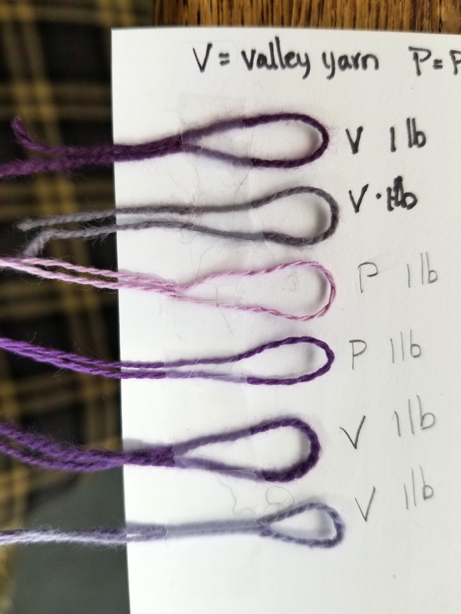
We eventually got all the yarn labeled, catalogued on little cards, and stacked back up, but I held back yarn I thought would work for the mats. I didn’t have a key color for each of the colorway choices, but I wasn’t about to order more yarn for a missing color, so I got creative with what I had. I substituted out the green for a more celadon color, I didn’t really like the green anyway (I did have that green, just not enough).

And I spent the day Wednesday, winding the 8 yard warp, sleying the reed, threading the loom, and beaming the yardage. I was weaving by Wednesday night. It is nice to know what’s on your shelf!

Meanwhile, on account of I was giving a remote lecture to another guild, also on the west coast, late last night, on the topic of Doup Leno, I decided to try to see if I could actually do that technique on one of my four shaft Structos. And so, I spent the early part of the week figuring that out, and was really pleased that not only did it work, but I really liked the fine lacey cloth from the 10/2 cotton, and I could use it as a second live demo during the lecture last night. I’m still experimenting with the cell height, but that’s expected.

And earlier in the month, or maybe it was during Christmas week when nothing happens, and there is always fun to be had in my studio, I set up an eight shaft Structo with a honeycomb structure, from Malin Selander’s book, Weave a Weave. I am having a blast with this one. All on account of I have these 30 Structo looms…

I’m sorry January is nearly over. I like this month, it is cold and nothing happens in the garden and I can hunker down and really play. Once the Learn to Weave class is over.

Stay tuned for more adventures on account of I have a bunch of looms that are naked and not happy with me, and of course, I have to update the prospectus now, for the What to Do with Leftovers lecture that has a viewing option of watching my video instead of me live on Zoom, for a lot less money! Seems like each time I do anything digital, there are 57 things that then have to be updated…
Happy New Year!