Life Happens…

I finished up my last blog, and headed “down” the shore (a NJ expression) for an overnight, meeting up with an old college friend and her husband, who had just flown in from the West Coast. It was a lovely day that Sunday, and then hurricane Erin stirred things up, and Monday was a cold, rainy day, thrilled to get rain, but sadly not at home two hours north, and definitely not a beach day. I headed home Monday night.

Tuesday I spent the day with my sister at the NY Botanical Gardens, finally getting to see the Van Gogh’s flowers exhibit. It was pretty incredible. But more importantly, my sister is a superior gardener and well versed in native plants. We poked around, examining labels, identifying plants with my trusty app, and acted like two horticulturists, or in my case really, a horticulturist wannabee… We discovered all the different variations of Rudbekia (hirta, fulgida, and triloba, if you are interested…)

Tuesday night I started feeling sniffly, and by Wednesday morning I was sick. I was so sick, feverish, I got really suspicious. 48 hours before, I was with a whole group of people… hmmmm.

So I wanted to start this blog post with all the glorious pictures of my new costume, and my cello debut at the Montclair Early Music Medieval fest. Turns out, I couldn’t go because, I TESTED POSITIVE FOR COVID! Damn… Bad timing. So basically I cancelled my life for the next 10 days, until I tested negative once more. I was really disappointed, so many things planned for the end of the summer. Fortunately I was sick for just a couple days, and stayed in bed, and did what any weaver would do, took a loom to bed with me.

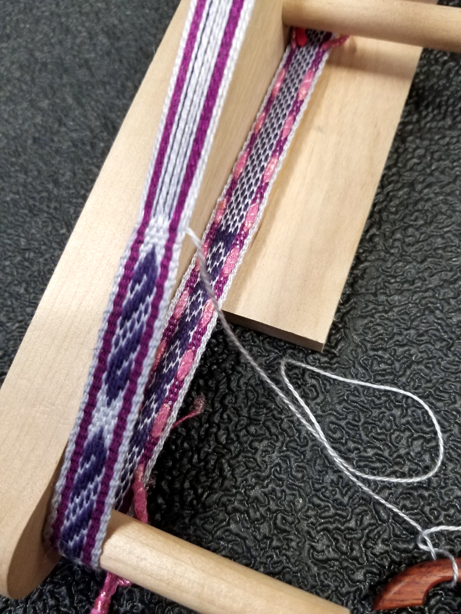
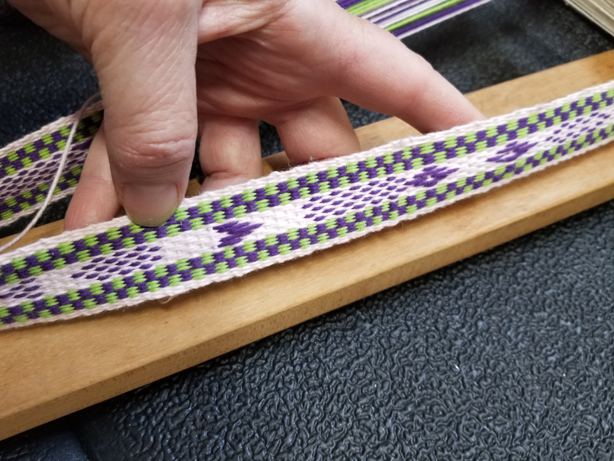
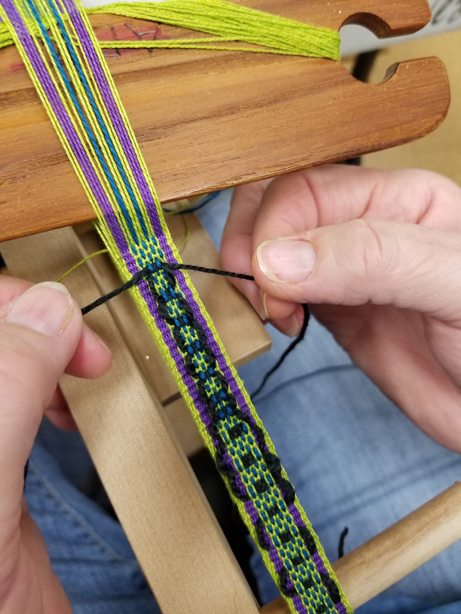
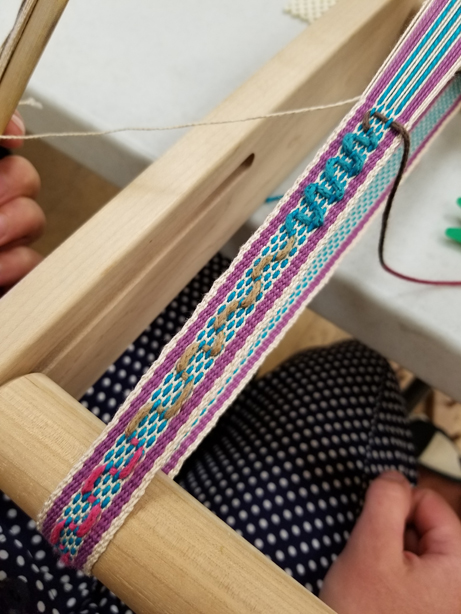
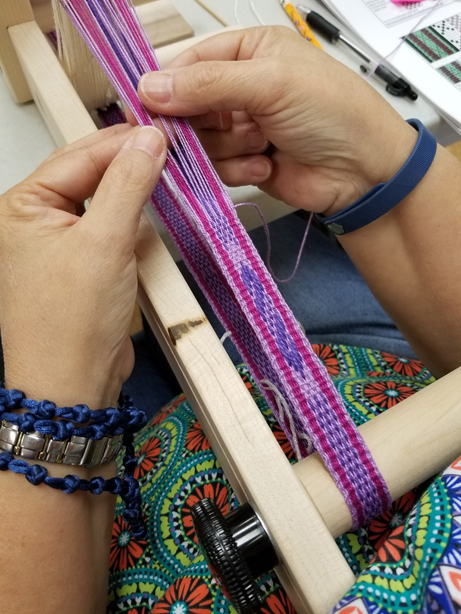
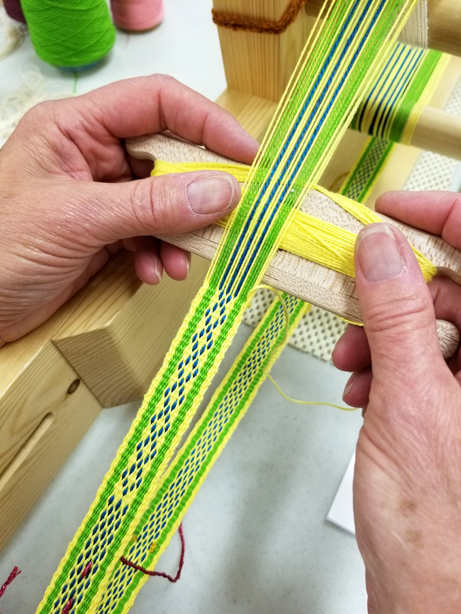
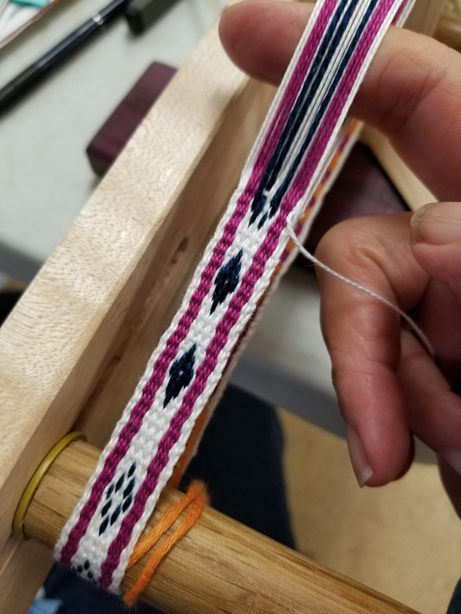
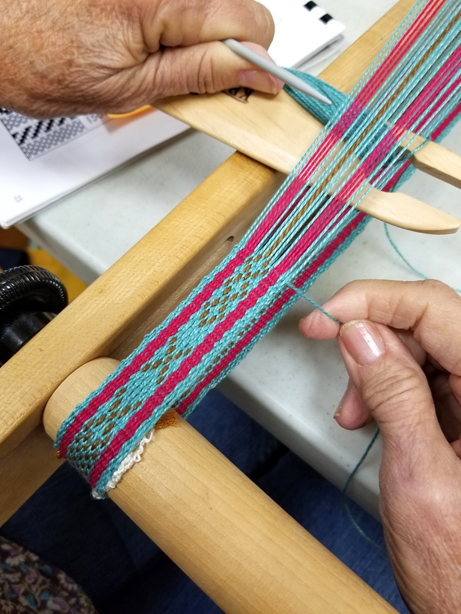
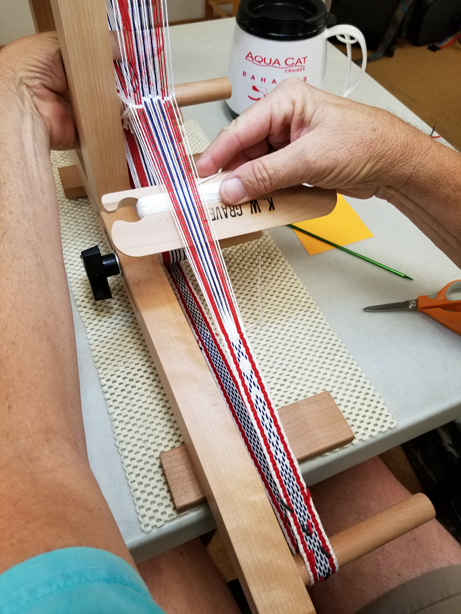
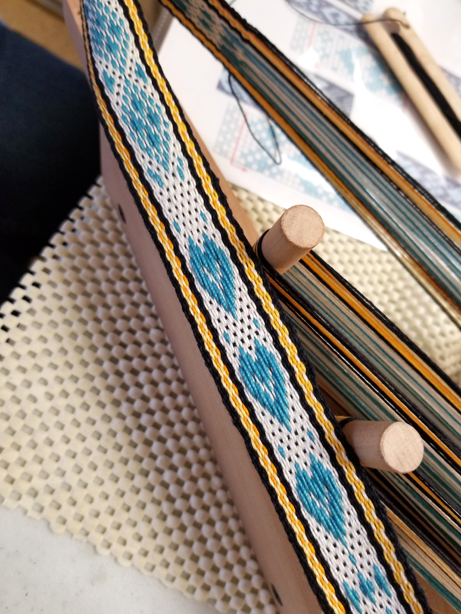
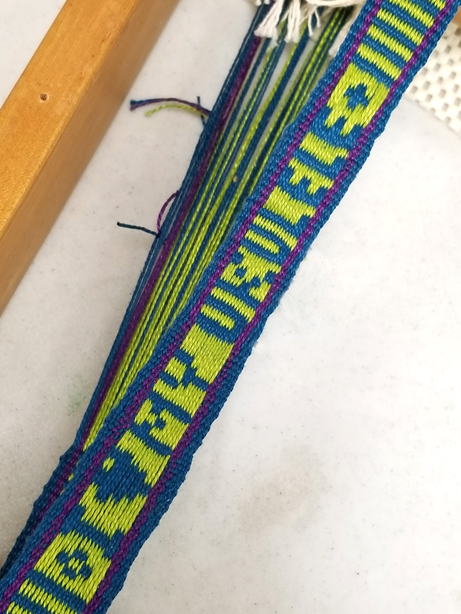
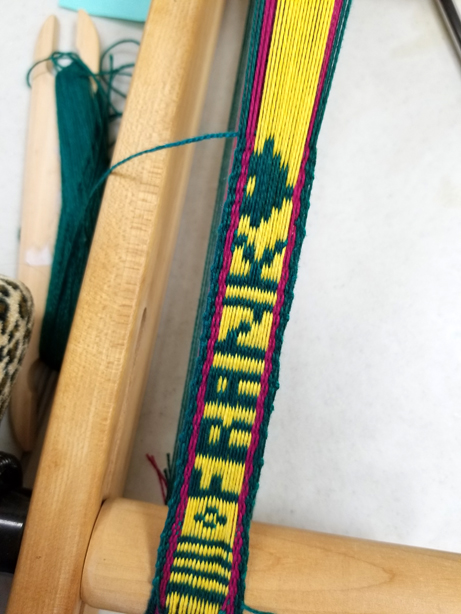
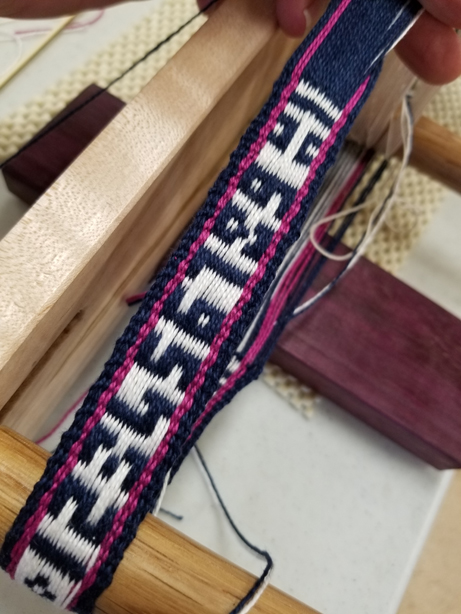
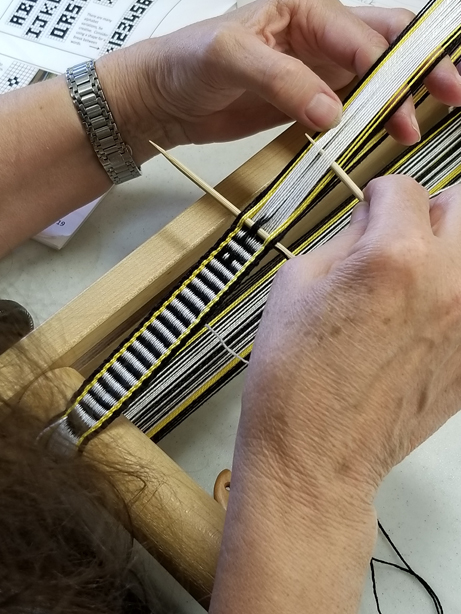
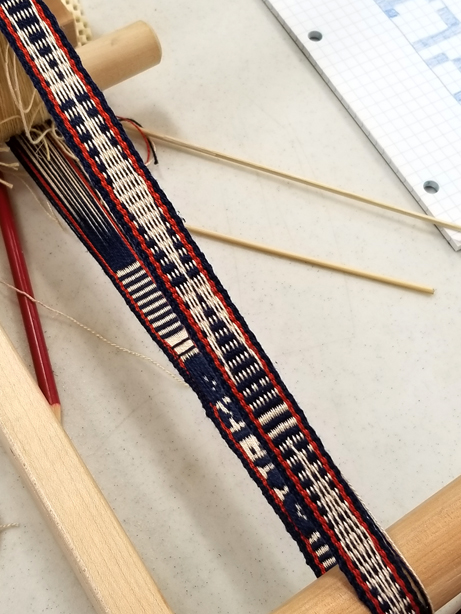
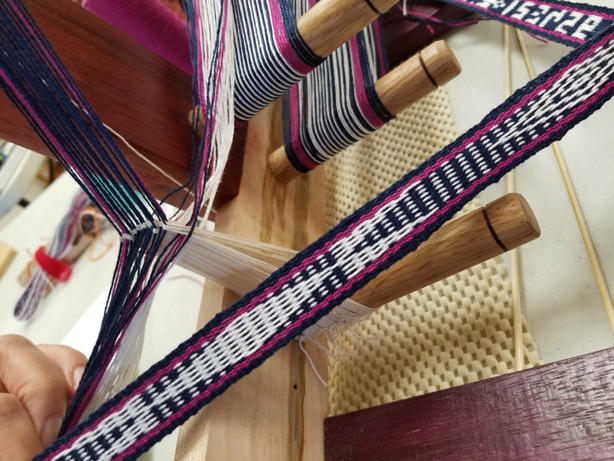
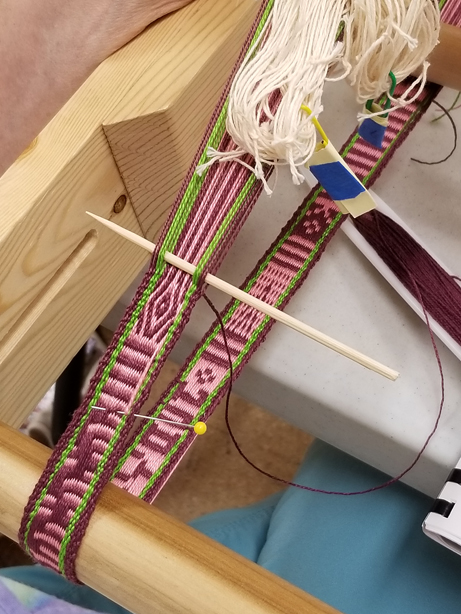
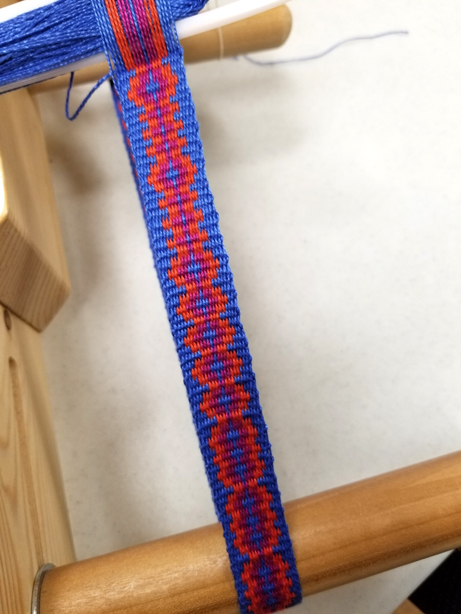
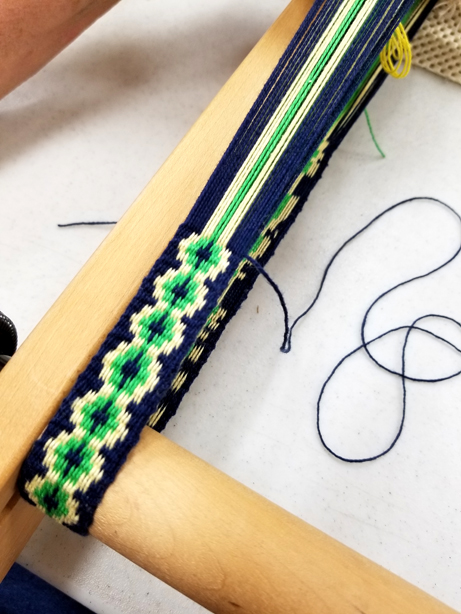
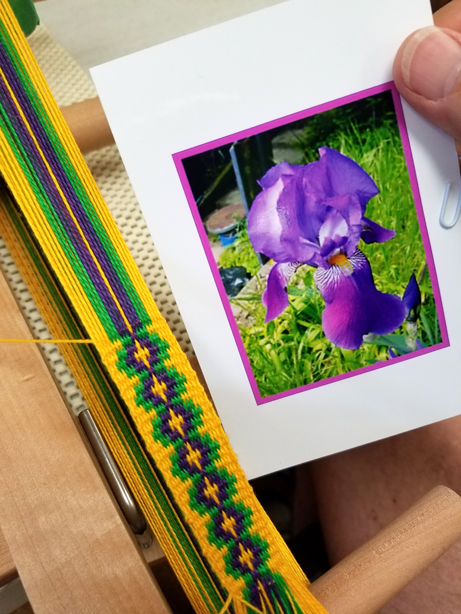
I cleared one of my Inklette Inkle Looms of a Supplemental Weft piece that has been on there for too many years.

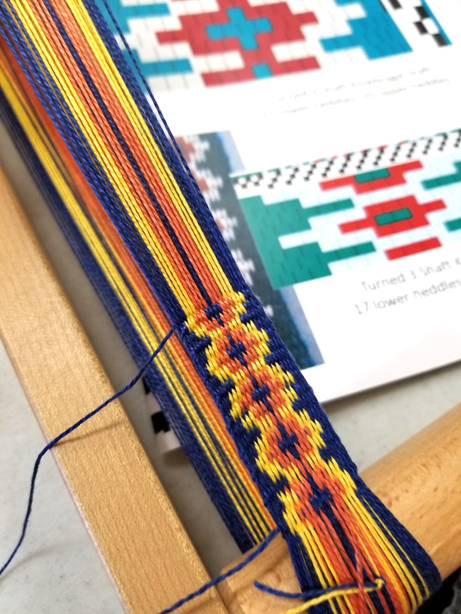
I was on a roll, and couldn’t go anywhere, so I cleared another Inkle loom, this one set up for turned Krokbragd. Both looms were donated to Jockey Hollow Weavers for their loaner loom program. Two more looms out of my studio.

Meanwhile, the gardens, in spite of no rain, (in spite of being sick, I still went out and watered the critical things) my tomatoes are prolific.

So I made a pot of sauce…

And that warp from hell? The one that wouldn’t end? I was determined…

6 yards of 20/2 fine cotton. I initially worked through the Robyn Spady overshot sampler from a back issue of Handwoven Magazine, switching back and forth from Rose fashion to Star fashion, and then I just said, “Screw it”, and picked one of the patterns that appealed to me, and just wove. And wove. And wove…

So now I have this incredibly long sampler I will have to do something with. I think zip bags? At least a portion of it.

Which meant that I could move another warp onto that loom from my dwindling collection of Structos. I chose to move over an 8-shaft Quigley, the original pattern on the Structo I got from Tom Knisely’s book of Table Linens. It was designed by Diane Click and is a four-tied Unit Weave.

It is complicated to weave, and when I originally posted it on my blog, a couple of years ago, Diane actually wrote me, told me she taught a workshop in this structure at the 2015 Florida Tropical Weavers Guild conference (I’m pretty sure I was there teaching) and generously sent me her handout. Since I had already set the loom up, I didn’t do much with it, but now that I had the opportunity to rethread, bingo! Now I can work through her handout and really study the structure.

I was on a roll, and though I finally tested negative for Covid, I decided to move the warp on the 4-shaft Structo I had set up with Doup Leno. I wanted to prove to myself that I could weave Doup Leno on a Structo, but table looms are painfully slow, so once I moved the warp, I blew through a half yard in a sitting. This is 10/2 cotton.

Then I decided to move the warp on another 8-shaft Structo with a Honeycomb draft, from Malin Selander’s Weave a Weave. Here is the original piece I cut off the Structo before I moved it to my 8 shaft 36″ floor loom.

This probably wasn’t my best idea, I should have waited for a smaller floor loom, but I wanted to reach out to my contact at FIT in NY who is patiently waiting for me to clear Structos. I wanted to make it worth the trip for her.

This is going to be a bit technical, so if you are not a weaver, just skip to the picture and move on. Malin Selander’s book is written for a sinking shed loom. I have rising shed jack looms. In a sinking shed loom, in Honeycomb, only one shaft gets pulled down at a time, the rest stay up. Easy treadling. (Though I’m curious because I’ve never seen an 8-shaft loom with a sinking shed, at least from the era the book was written). I have rising shed jack looms, like I said, which means, to have one shaft stay down, I have to lift 7, 36″ wide rock maple shafts. This is quite the workout. And yes, I could weave it upside down, but trust me, you don’t want to do that in Honeycomb. Cause I’m kind of designing as I go… Not only that, one of the designs in her Honeycomb sampler calls for 18 treadles. I have 10. It is easy to weave on a table loom, you just pull levers and engage the shafts you want. (There are 254 combinations of shafts in an 8-shaft loom) Not so easy on a floor loom. So I jumped down a rabbit hole, determined to figure out a skeleton tie up so I could use more than one foot, and get the tie-up down to 10 or less treadles.

There is an old program on the internet called Tim’s Treadle Reducer. I went there, and either it is no longer functioning, or I blew it up. If anyone knows its status, please let me know, it was a really handy tool. So I was on my own.

I sat with the draft for an hour or so, after transferring the tie-up for a rising shed loom. And slowly I worked it out to be able to use less than 10 treadles, two or three at a time, but set up in a way that one foot could press two at once, having the treadles adjacent to one another. I was pretty damn proud of myself. (I tweaked it further, shifting the plain weave to the middle, the photo shows the middle of my calculations.)

I haven’t woven that one yet, but this is a different design in her Honeycomb sampler, it is a very cool weave structure, but I’m going to be with this one for a while, since there are something like four yards on this 16/2 cotton warp.

Yesterday was an interesting day. First, it rained. We have been under extreme drought conditions here, I’m struggling daily to keep my plants alive, and Wednesday we planted another four dozen native bushes and perennials. It started raining Thursday night, resumed on Saturday, and well into this morning. I’m thinking we got more than 2″ of rain. For that I got on my knees and gave thanks to the universe for taking care of its own.

Secondly, if you own a PC with Windows 10, you probably know that October 15th is D Day. Microsoft will no longer support Windows 10 with security updates. Which is really problematic, leaving any computer with Windows 10 vulnerable. My tech guy came over yesterday, I was not going to try this myself, to upgrade my two computer systems to Windows 11.

Yeah, so the first computer, my laptop I use for teaching online, which I can annotate with a pen, set up in my studio, the processor in it won’t support Windows 11. So $1000 later, I have a new laptop on its way. Apparently the processor in my desk top computer will also not support Windows 11, but my tech guy, who is really brilliant, found a work around, and got everything on my desktop updated. Of course I have high anxiety knowing by the end of the week, I’ll be ripping my hair out making sure all my programs work on the new laptop, finding registration codes, passwords, etc., and getting a new code for Fiberworks. Which I definitely need that critical piece of computer software.

So one computer is safe and updated. And it rained. And I’m Covid free. And my sister didn’t get it. And my garden continues to delight and astound me. Leaves are starting to turn, things are beginning to die back. And I just cleared a number of looms, all going to good homes who will use them for teaching.

And I looked at the calendar and my eyes got really big, and I realized I have six weeks to make as much stuff as I can for the guild sale, inventory sheets are due the end of October. OMG! Fortunately I have a 5-yard plus Overshot sampler to start with…

Stay tuned…

Other…

Seems like everything I do, from doctor’s appointments to purchases online to attending theater events, gets followed up with a survey. “Tell us how we did!” I hate them. I understand their necessity, and it would be great if the people reading them actually took the comments to heart, but mostly all this extra paperwork just makes my sitting in front of the computer even more overbearing, when I really just long to be in the studio.

When I do fill out a survey though, most of my opinions don’t fit the questions. If there is a box marked “other”, I usually click it, because in my life, most things require an explanation. I’d be terrible on a jury. I can’t answer yes or no. Even in a class, students ask me questions and my answer is always “It Depends…” Life isn’t black and white. Fortunately. It is in breathing living color, and there are lots of shades and tints within!

So with that said, I have a bunch of different “other” looms that didn’t get mentioned in my last 3 blogs, bringing the total of named looms to 64 I think. There are about 20 frame looms in the attic, for teaching purposes, and about a dozen hand made Schacht Inkle Loom knock offs, also used for teaching. And I think 7 still in the box Inklette Looms from my years of teaching, and I didn’t count any of them. I counted the ones I use, that I named, and so, because I wanted to document where I am at this point in my life, I’m going to finish out the list with the “other” looms.

Every weaver has probably seen or has a Peacock loom. I even found an ad for one, when I was assembling a lecture for a guild a number of years ago for their 50th anniversary. I researched what was popular in the day when they got started, and it was quite a representation of where we have been as a handweaving community.
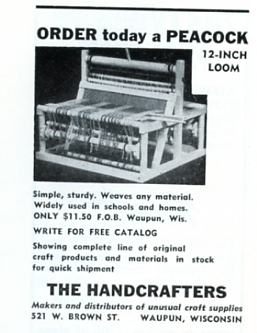
So I have a little 2-shaft Peacock loom, named “Peacock” which is pretty unoriginal, but there you go. I use it when I have a young person visiting and they want to “try weaving”. I have refurbished it with new heddles, which I made with a jig, and new roller cords, with heavy duty shoe laces, and it is a solid little workhorse when in the hands of a new weaver wannabee…
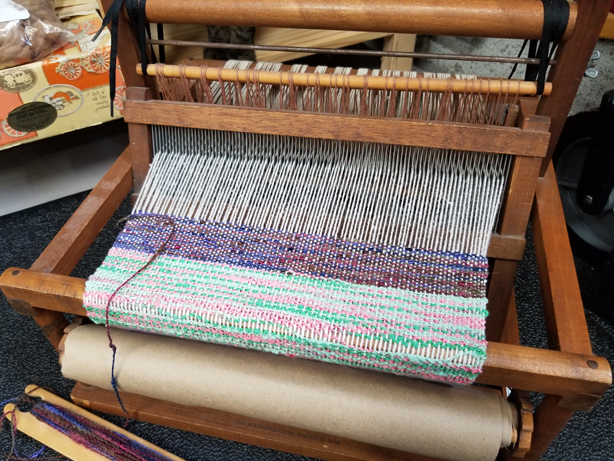
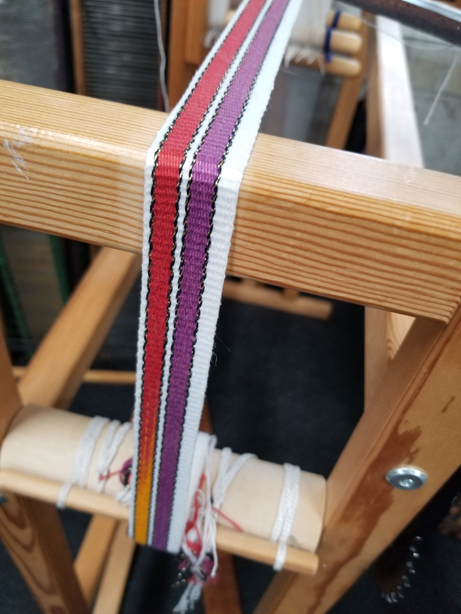
A number of years ago, my daughter called me while I was on the road teaching, about a Glimakra Band Loom for sale from one of our guild mates. I told her she wouldn’t like sitting sideways, but she persisted and I gave her the money to purchase it. I was right. She hated sitting sideways, and immediately redesigned the way the treadles worked so she could sit in front. That would be my daughter! This loom is named “Seven“, not the number but the Star Trek character. On it is a gorgeous warp, which she put on, plain weave, but hand dyed yarns that are wound in an ombré effect.
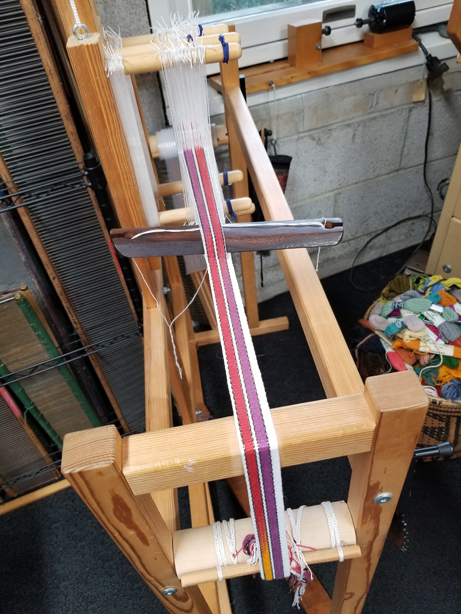
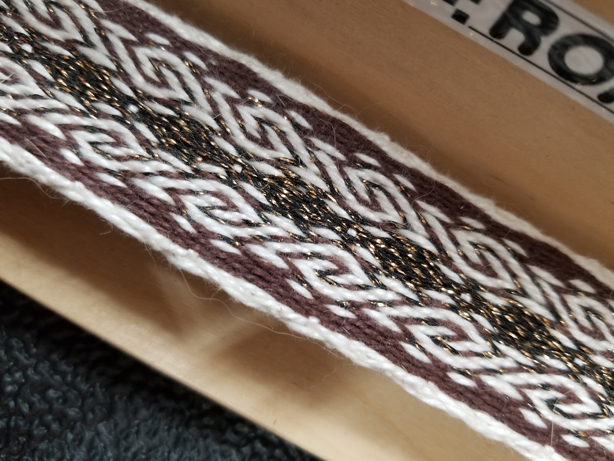
We own a card or tablet weaving loom, purchased from John Mullarkey years ago at a guild workshop. I’ve done card weaving many times, still prefer inkle weaving, and John and I have on more than one occasion done a “Battle of the Bands” performance at a couple of conferences. Tablet woven vs. Inkle Woven… That said, we have this loom, that my daughter warped a number of years ago, named “Rom“. I know the pattern is in one of my many booklets from John and I should be able to figure it out. My daughter isn’t big on accompanying paperwork. So I’d like to finish it off, in one of my outdoor weaving stints.

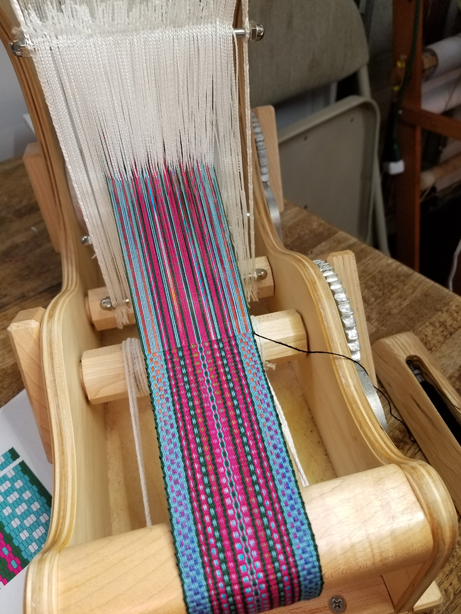
I also blogged recently about my Gilmore Wave loom, which I dug out and warped after a trip to a lace day sponsored by the local lace group, where I came home with a little baggie of about $200 worth of lacemaking threads, some hand dyed. I immediately set to work warping my Wave loom, called “Quark” and am really happy with the result. Warping was a challenge, but weaving is a breeze.
The rest are a large assortment of inkle looms, there are four Schact Inkle looms, seven Inklettes from Ashford, and a Beka, named “Beka“, which doesn’t have a warp at the moment, but I recently finished off a long warp for an Anni Albers’ Necklace project with my guild around the holidays.
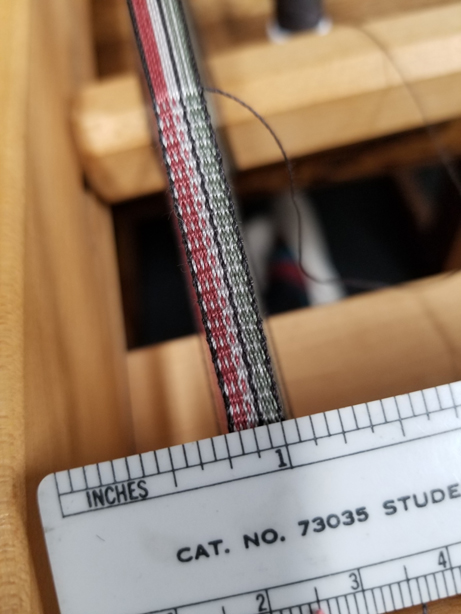
I loved the Inklettes for their portability. I could fly somewhere to teach, and pack a half dozen of them in my large roller bag and be able to have a technique in progress to demonstrate with. I’d love to clear them, since I don’t do that anymore, but all of the techniques are part of my Advanced Inkle Weaving class (which I can do remotely), and there is a monograph available that details all of the techniques and how to do them. You can purchase the download in my eStore here.

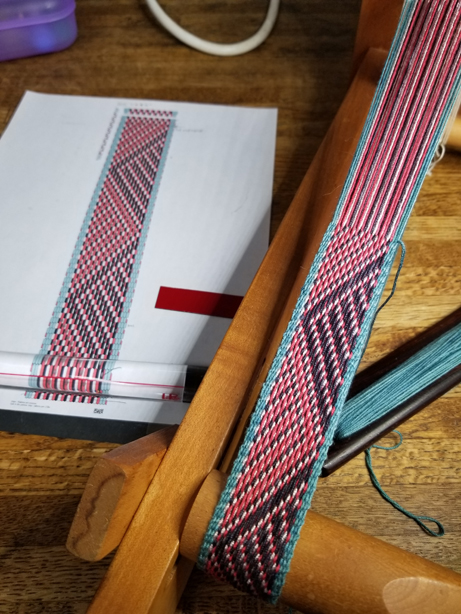
Bryce” has a beginning sampler with plain weave and Baltic Pick-up. I keep it as a “Learn to Weave” loom for inkle weaving.
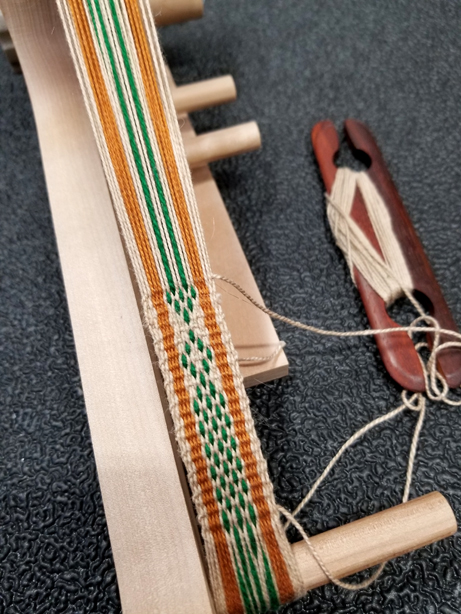
Adira” has a sampler featuring a complementary warp, light and dark, specifically for pebble weave. Warp yarns are Tencel.
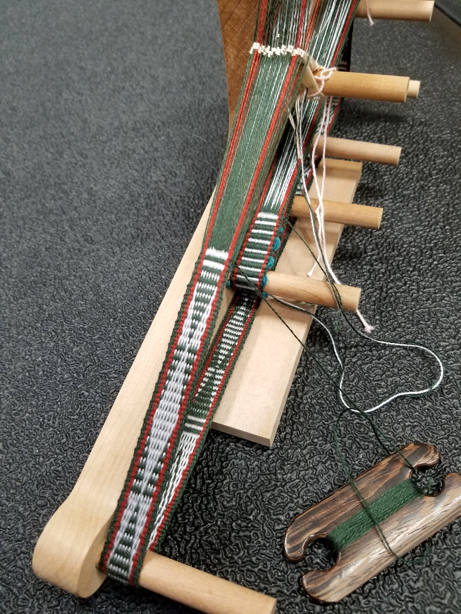
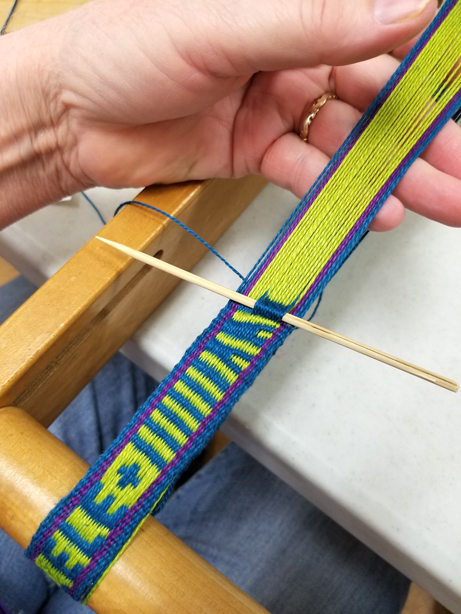
Stamets” is set up for Paired Pebbles, and I just keep repeating this small motif, for demo purposes, but it would be nice to have a finished band, maybe across the top of a small zippered bag! The threads are 12 wt. cotton..
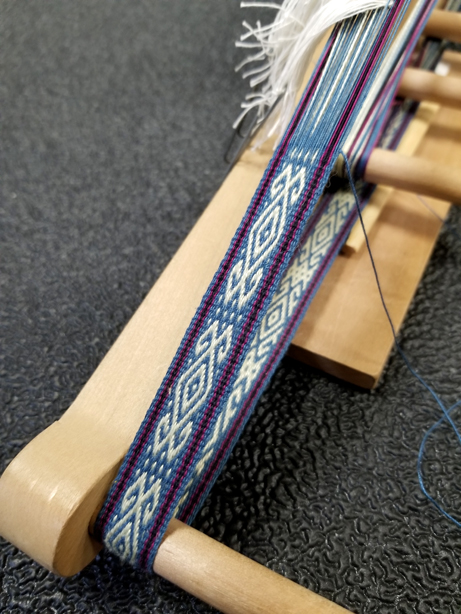
Tilly” has a sampler on it, for teaching purposes, supplemental warp and baltic pick-up.
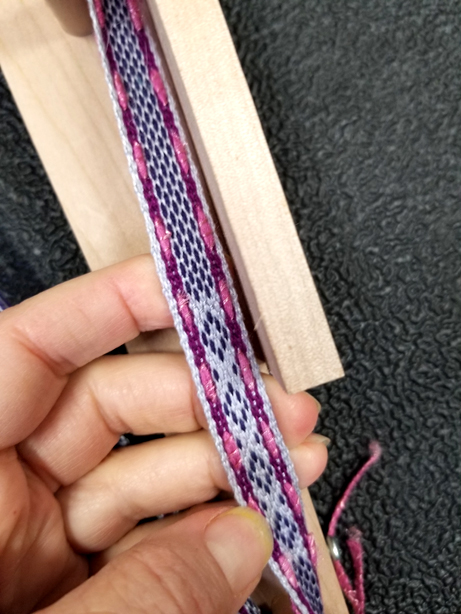
Nelson” is set up for a supplemental weft project, trim for a jacket, like the Chanel style.
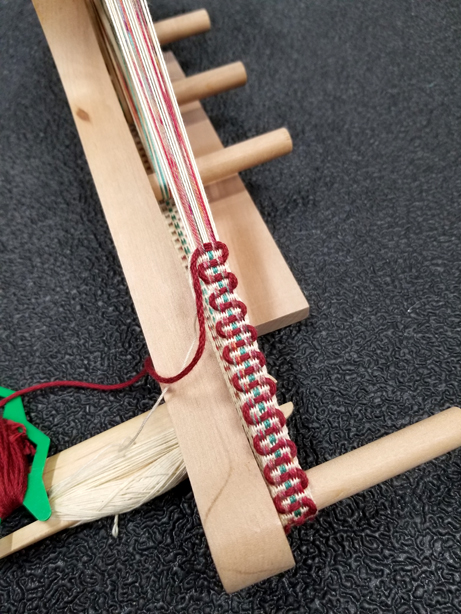
One of my favorite patterns, from Ann Dixon’s book of Inkle Weave patterns, is something called Runic. It is free form weaving, you make it up as you go along, and I set this loom named “Owo” years ago, with hand dyed silk yarns from Treenway Silks. I need to finish it.
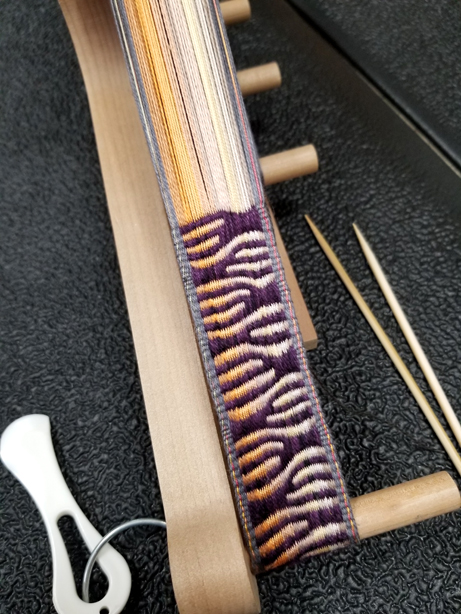
And “Detmer” is threaded for 3 shaft Turned Krokbragd, done on an inkle loom, which is a very cool thing. This is also Tencel.
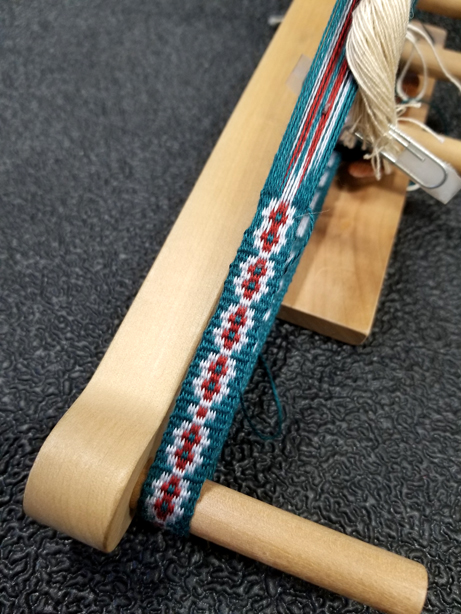
That leaves the four Schacht Inkle Looms. “Rios” is a sampler, also for teaching purposes, threaded in a complementary warp, light and dark.
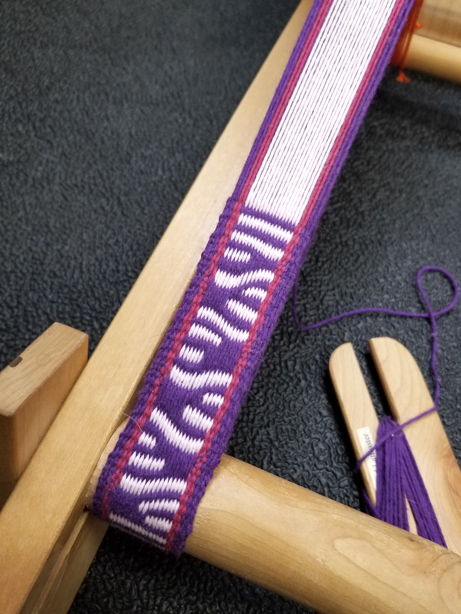
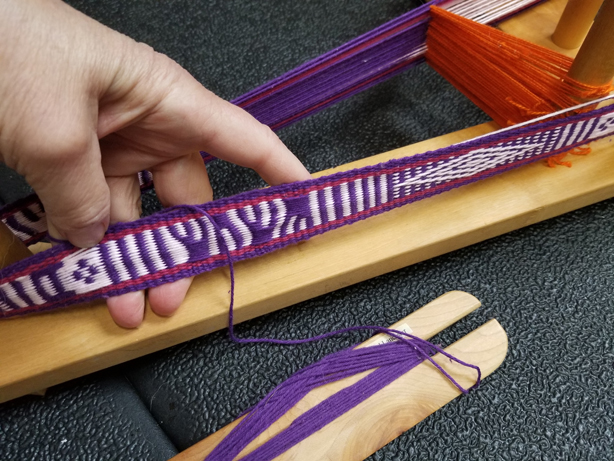
Raffi” is another of my Learn to Weave looms, set up for simple Baltic Pick-up, or just plain weave.
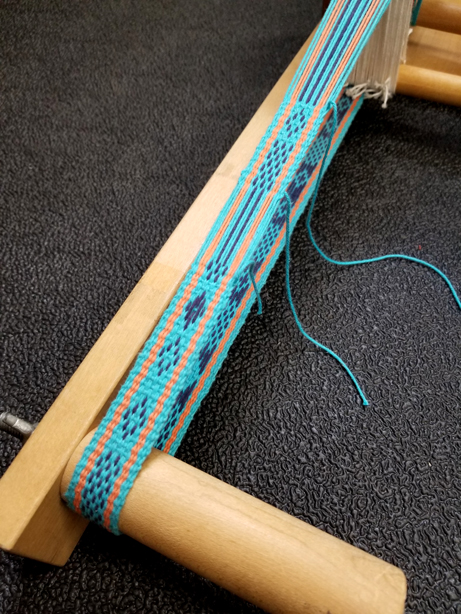
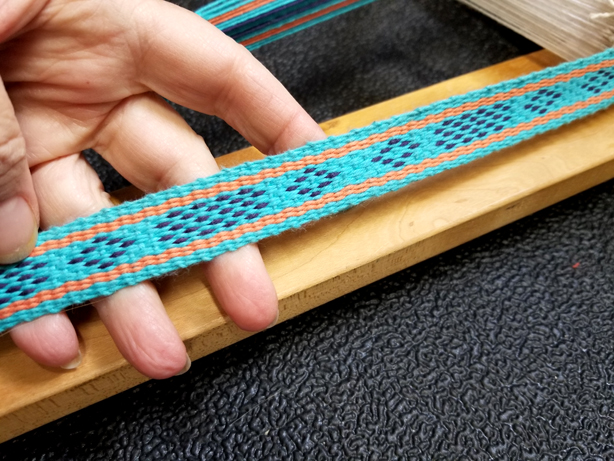
Jurati” is also set up as a beginning loom, with plain weave and Baltic Pick-up options.
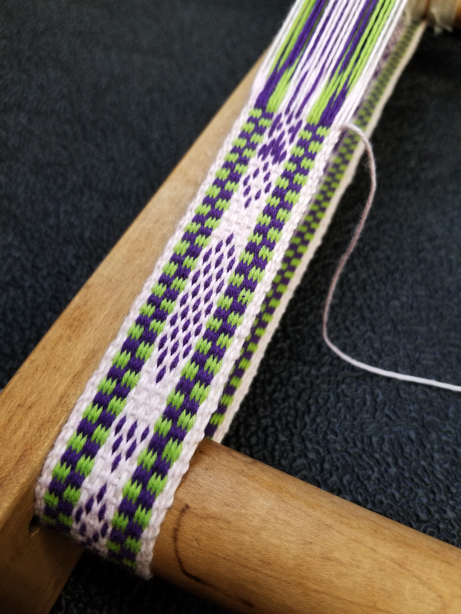
And finally, yes there really is an end, is “Elnor“. I set this up in 2021, when I downloaded Annie MacHale’s newest book for Three-Color Pickup for Inkle Weavers. It took me a while to master the pattern, and of course I don’t remember what I did, so I’ll have to go back and figure it all out all over again, but that’s the point of all these looms, so I’ll keep figuring it out and one day have all these structures in my head ready to explain intelligently as needed.
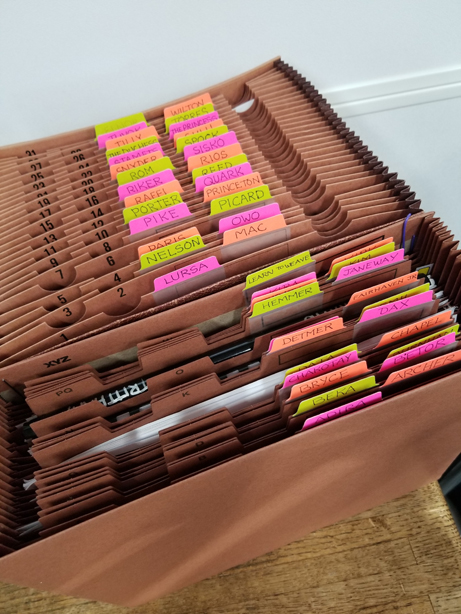
My guild mate, who comes on Tuesdays to just play with all of my Structos, suggested a huge accordion file to store the paperwork for each of the named looms. The one she brought me wasn’t big enough with 30 something files, so I bought a second one and taped them together. Now to get paperwork for some of these looms from my daughter!
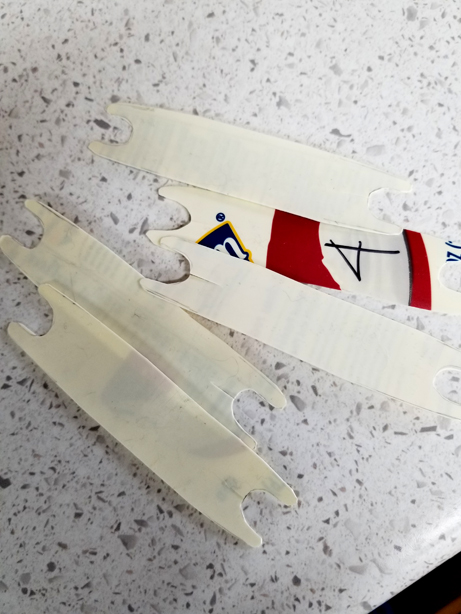
So you might wonder how I have shuttles for all of these looms, especially the Structos, which I talked about in the last post. I have a huge number of shuttles, stick and boat, but needed way more, and guild mates jumped to the task. Some I cut myself, from quart yogurt containers. I’ve also used take out food containers. The flat rectangular kind.
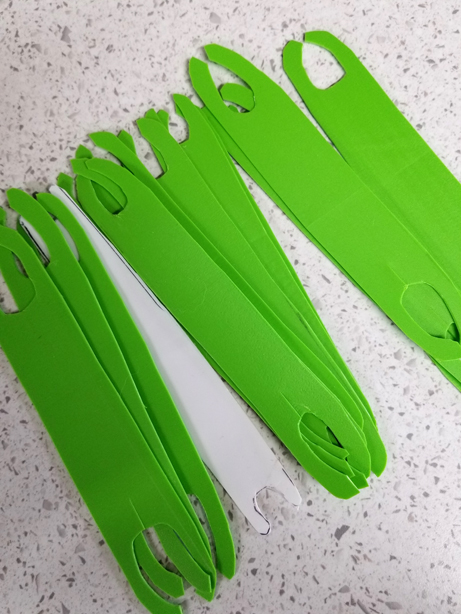
My guild friend who comes on Tuesdays went home and cut me a bunch from her cat litter tubs.
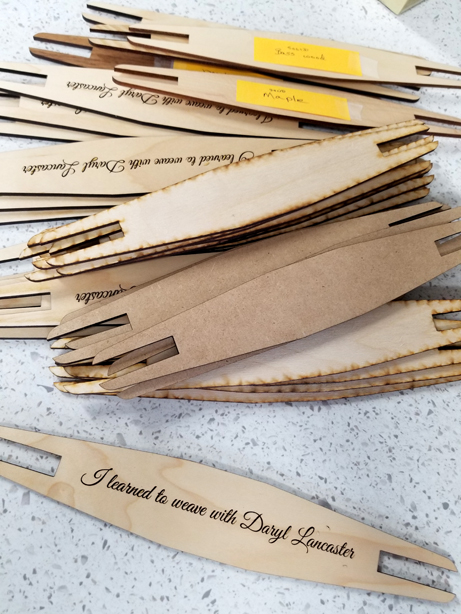
My other guild friend went a little crazy with her GlowForge and cut me a whole bunch of gorgeous stick shuttles and programmed in a sweet signature on some of them. In exchange I paid her guild dues. Small price to pay!
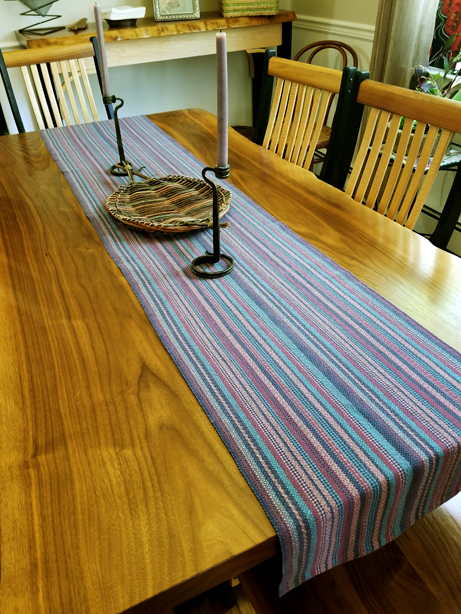
I mentioned in the last post, that I had already cleared one of the floor looms. That was a 4-shaft commission for another guild mate, for a friend of hers dining table. It needed to be 84″ long, and she wanted me to weave it in whatever structure I loved the most. The colors had to match the friend’s decor. My favorite structure is the one where I combine all sorts of different structures lengthwise in the same cloth. I have previously mentioned I documented this concept heavily in the Heddlecraft issue #38 I wrote on the subject. But I usually work with 8 shafts. I only had a 4-shaft loom available. So I reread my article, and revisited one of the 4-shaft drafts I included, from Oelsner’s Handbook of Weaves, and expanded it to include a straight draw twill, basket weave, and a broken twill. Using color and weave effects, I am so freakin’ proud of this cloth and its complexity, on only four shafts. So here is the runner on my own table, I can’t wait for photos from the client’s friend’s table.
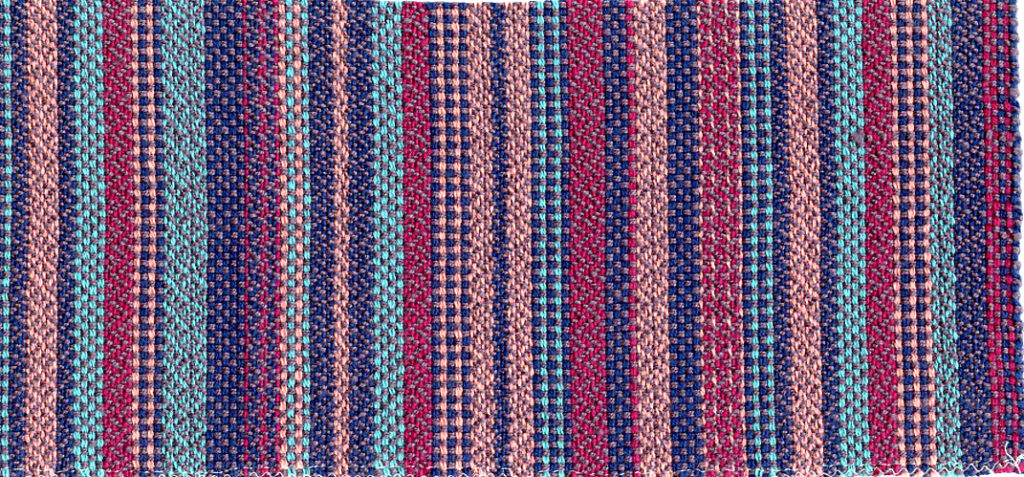
And here is a close-up of the fabric. The draft and details are available in my eShop as a $2.99 download here.
I’m heading out next week for a very long overdue vacation. I haven’t been on a plane since March of 2020 when I barely made it home from the west coast before the world shut down from Covid. My daughter and I will be on a plane for 15 hours to Japan, where we will meet up with a tour sponsored by Tom Knisely and his daughter Sara Bixler, from Red Stone Glen. We will make a circular tour of the northern part of Japan, stopping at many textile centers for lots of hands-on experience and inspiration. Oddly enough, I’m trying to figure out what to pack, not clothing or toiletries or electronics, but what yarn I should bring. Because no good textile artist goes anywhere without a project. Socks to start, I ordered some lovely yarn from Webs, hope it comes in time.

If you do order from my shop, digital products will be available immediately since I’m not involved. Don’t forget to check your spam for the email with the link. If you order products that I have to ship, please be patient while I’m busy in Japan. I’ll resume shipping after the 18th.

So dear readers, until I return, I’ve given you things to inspire you, and keep you busy while I’m gone. My son will stay here off and on and check that all is well with the garden and the ponds. And my handyman will come around as well. I would be lying if I said I wasn’t feeling any anxiety about leaving and going so far away for so long. I’ve been home for too long, so this is an important trip for me to regain my traveling feet. (And no, I’m not planning to resume teaching on the road!)

Stay tuned, there will be lots to tell when I get back…

Running From the Storm…
What a week.  I’m not sure where to begin, except to say right up front I’m home safe in NJ, for now.  

I left a week ago for Atlanta, and on to John C Campbell, a folk school in the Appalachian mountains in the western corner of NC where they meet TN and GA.  We had heavy thunderstorms almost every day, but they were unrelated to what was happening in the Atlantic.  The folk school is gorgeous, magical, and I can see why it is a popular place to learn craft.  I am so grateful to add this to my resume, my students, the facility, the food, housing, staff and infrastructure were all wonderful and encouraging and promoting of creativity and inspiration.

I took a break from teaching my regular garment construction intensive, and taught a five day inkle weaving intensive.  I don’t think I am capable anymore of teaching anything but an intensive. I work my students hard.  I don’t think anyone has ever complained that they didn’t get their money’s worth in one of my classes.  And this one in particular was pretty challenging, especially if you had little or no weaving experience.  I started students off, (there were 10 of them) learning about the inkle loom, and how to set it up efficiently and how to weave a competent band.  By lunch the first day, they were all right there and doing really well.  

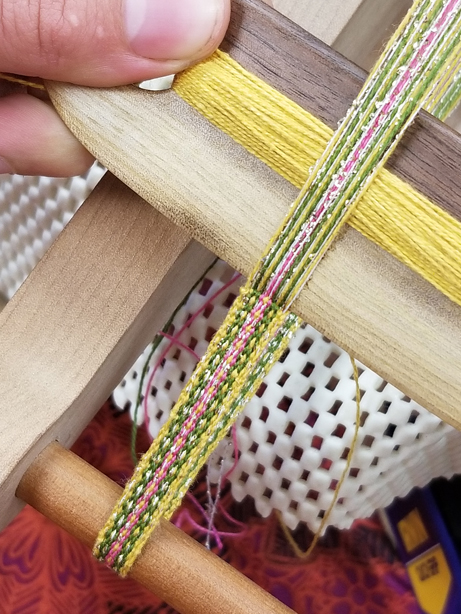
Then I introduced supplemental weft, which was lots of fun and very creative.

Followed by supplemental warp.  

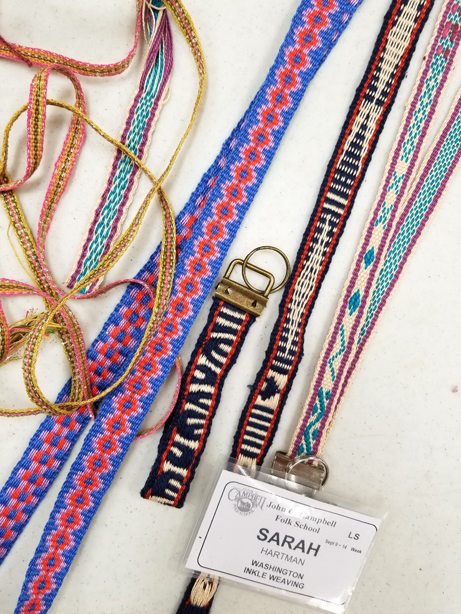
The afternoon of the first day we tackled what at first seemed challenging, but by the time the class ended, everyone was thinking that this technique was really elementary! This is a 2:1 pick up, often called Baltic.  Most students did the designs on five thread, a couple with more experience managed 9 thread.

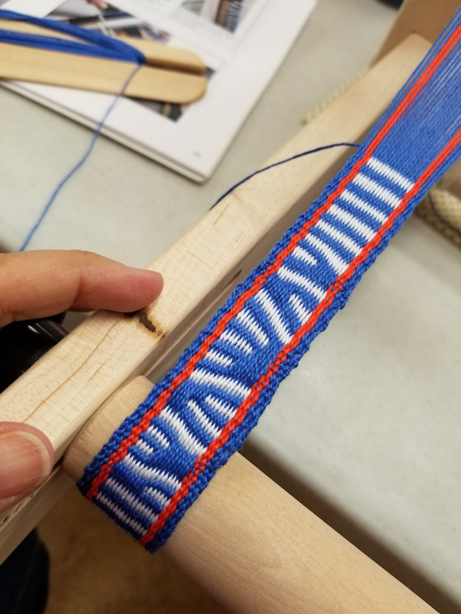
On Tuesday we rewarped the looms, using complementary warps, light vs. dark.  The first technique was name drafts, which again, seemed so hard at the time, but by the end, students were returning to the name draft for a bit of a break!

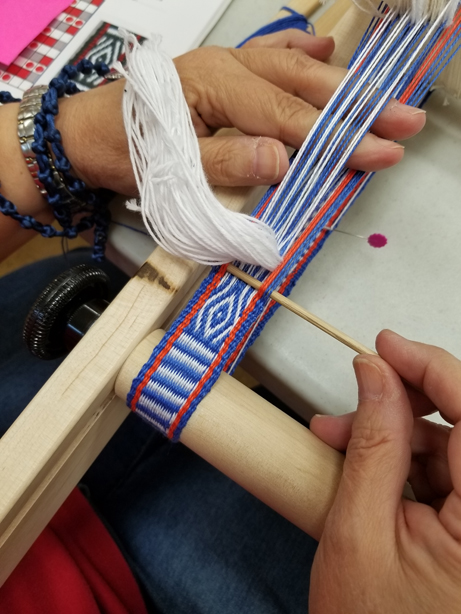
Then we explored pebble weave, some simple diamonds, each technique building on the previous one.

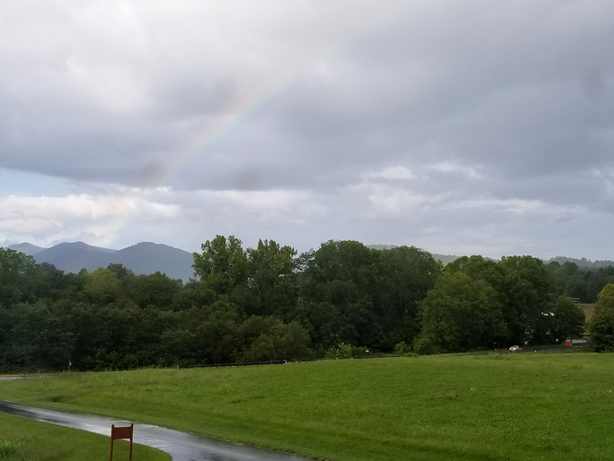
It became pretty obvious that there was some serious stuff happening in the Atlantic, and one of the students lived on the coast and decided to leave after lunch on Wednesday, to head back to retrieve her animals so she could evacuate.  I saw a lot of very nervous students, trying to decide what to do.  Meanwhile there were heavy thunderstorms throughout my stay, which resulted in some pretty awesome rainbows.

Next up was a free form technique or Runic as Ann Dixon calls it.  I explained the basics of how it was done, and students just made up their designs.  Many of the techniques are adapted from Ann Dixon’s book of Inkle loom patterns, I make up the patterns for them to use, but encourage them to buy her book for more ideas.  Most had a copy by the time the class ended.

Wednesday afternoon they were ready to tackle Paired Pebbles, which is an Andean technique, and one of my favorites.  Laverne Waddington publishes many books of patterns, usually done on the backstrap loom, but very doable on an inkle loom.  Students were all copying the links so they could order for themselves.  Laverne’s books are available as downloads from Patternfish.com.

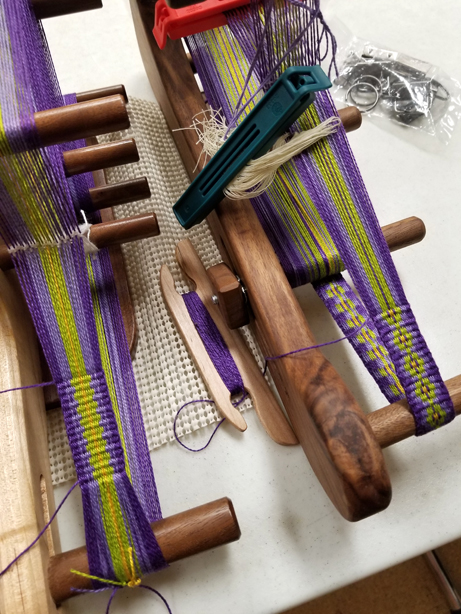
Thursday morning we rewarped the loom, and you could see how exhausted everyone was, but I saved the best for last, and once everyone caught on, there were some really pretty designs using a three shaft technique called Turned Krokbragd. 

One of my students Margaret rewarped a companion loom to coordinate with her Krokbragd piece, so she had these beautiful small inkle looms, handmade from gorgeous woods, which she had bought on the internet.

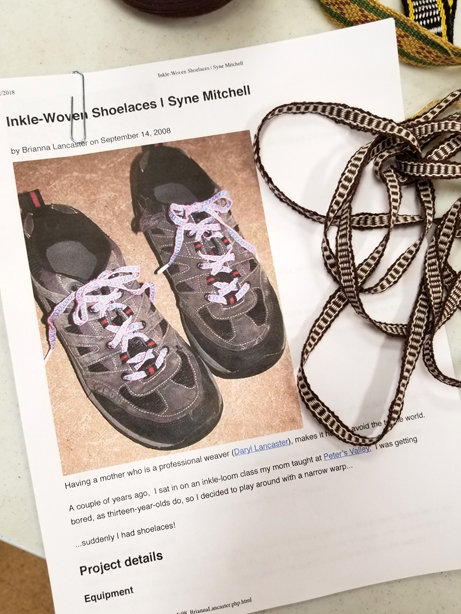
I had a mom and daughter team, which was so wonderful and sweet to watch, sort of like watching my daughter and me in a workshop together.  Sarah, like my daughter, though she had no previous weaving experience, ran rings around everyone in the room.  To be young again with all that stamina and energy.  At one point, late one afternoon they asked if they could just warp up something simple, like shoe laces.  I had showed the link for the article my daughter wrote 10 years ago when she was just 15, for an online magazine called Weavezine.  Though the magazine is not in publication anymore, the archives are still there, and they went off and downloaded the article.  Next thing I new, they were both happily weaving off a pair of shoelaces each.

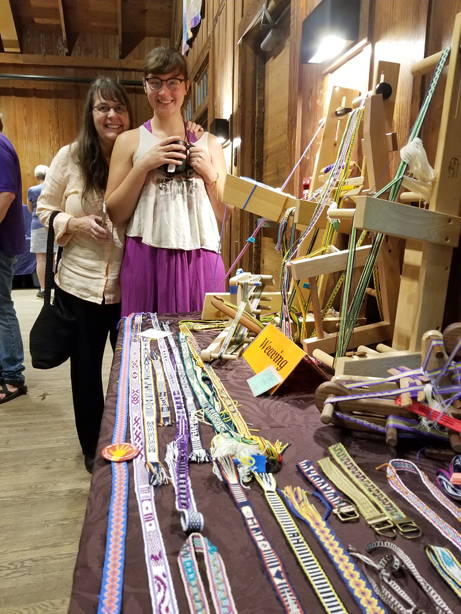
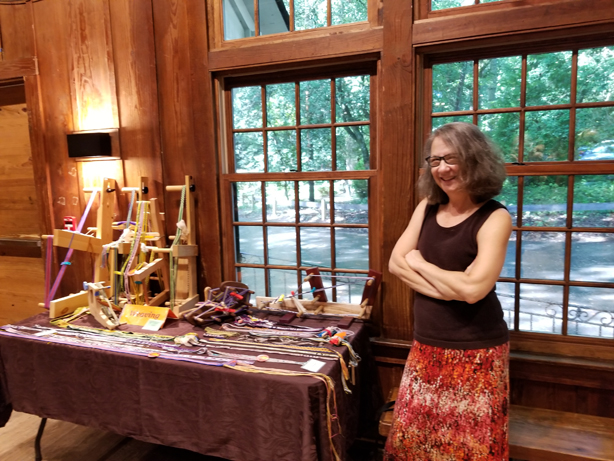
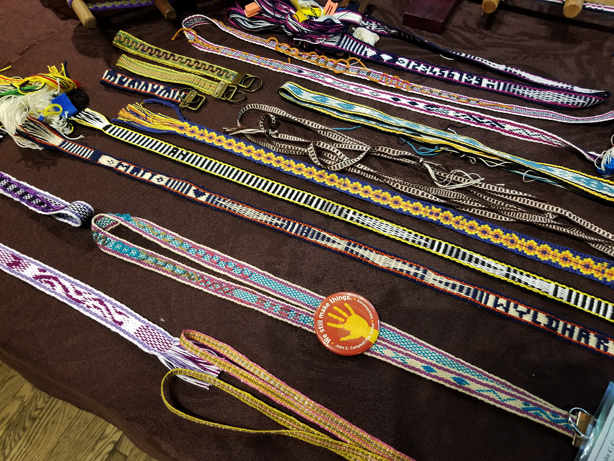
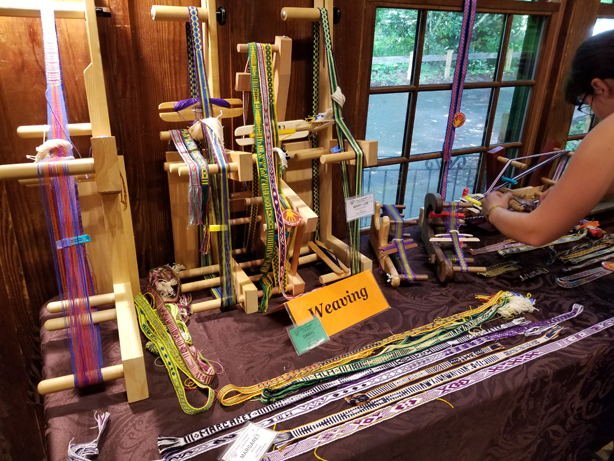
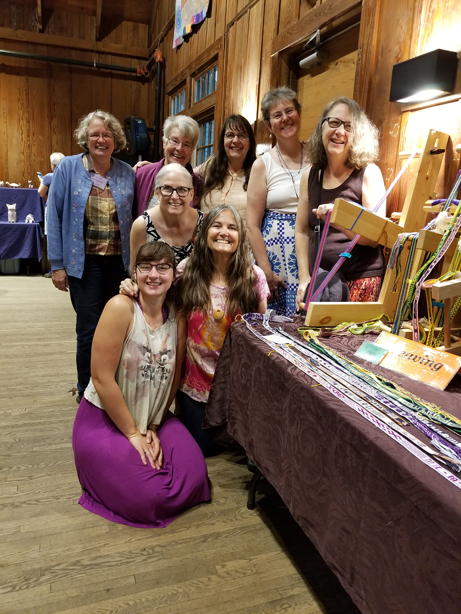
Everyday at the folk school is magical, from the well maintained wooded paths, to early morning song where local folk singers come to perform, to Tuesday yoga, demonstrations, concerts, and stuff that was hard to fit in sometimes.  I tried to keep the studio open in the evenings, so students could concentrate better with less distraction.  The last day was graduation day, and each of the dozen classes that happened during the week, from clay and woodturning, to blacksmithing, enameling, painting and photography, had a show and tell of students accomplishments for the week.  The dulcimer students gave a lovely performance singing and playing in a round.  My class set up their table with looms still in progress and a stunning array of bands, they were so proud of what they had done.  The class photo was missing a few students, some had already left to beat the storm, but the joy and pride was evident on their faces.

All of these technique are available as a download and as a bound monograph on my website in my book, Advanced Inkle Loom Techniques.

I had planned to stay on for the weekend to take a sketchbooking class.  As I followed the path of Florence, it became apparent that it was headed for the folk school and though I didn’t think the storm would directly affect operations, maybe knocking out the WIFI, I was worried that the storm would graze Atlanta and I wouldn’t get out Sunday night.  With a turn around flight Wednesday to Sievers in Wisconsin, I decided not to chance it and rebooked my flight to Friday night (thank you United for not charging me to rebook) and took off shortly after the presentation, hopped the shuttle to the airport and made it home safely and uneventfully by late Friday night.  Oddly enough, the storm is veering back toward the Atlantic, heading right over NJ, and I’m hoping the rain and wind are finished before I fly Wednesday morning.  Crossing fingers.

Stay tuned…